- Xi'an Is Not a One-Day Terracotta Army Stop
- The Terracotta Army: The Right Order for the Three Pits
- Tickets and Transport: Where It Goes Wrong
- The City Wall, the Bell Tower and the Muslim Quarter
- Shaanxi History Museum and the Stele Forest: Booking Is Everything
- Huaqing Palace, Mount Li and the Terracotta Army in One Day?
- How Many Days? Two, Three and Four
- Where to Stay: Bell Tower, South Gate or the Pagoda
- Arriving and Getting Around
- What to Eat in Xi'an
- Comparison Table: A Three-Day Xi'an Framework
- Five Common Mistakes in Xi'an
- Why a Tailor-Made Trip Pays Off Here
- In Closing: Xi'an Rewards Understanding
Xi'an Is Not a One-Day Terracotta Army Stop
For many visitors the plan is a single sentence: see the Terracotta Army. So the trip becomes arrive, drive out to Lintong, see the warriors, return to the city, leave the next day. That is workable, but you will have skipped the parts that justify the city's reputation as the capital of thirteen dynasties.
Xi'an has deep layers. The Zhou, Qin, Han and Tang all left their mark here, and the city wall, the Bell Tower, the Big Wild Goose Pagoda and the Stele Forest preserve a urban layout that is genuinely Ming and Tang. Add the Shaanxi History Museum and you can trace a continuous line from Western Zhou bronzes to Tang gold and silver in a single day. These things are not on the same street, and they need time.
More importantly, the Terracotta Army is not in Xi'an city at all. It sits in Lintong district, roughly forty kilometres east. Getting there, seeing it and getting back consumes most of a day. Add Huaqing Palace and the day is full. That means the city's own content has to be given separate time rather than squeezed into spare hours.
So the first decision is not how to reach the Terracotta Army. It is how many days you are giving the city. Once that is settled, every later trade-off becomes clear.
The Terracotta Army: The Right Order for the Three Pits
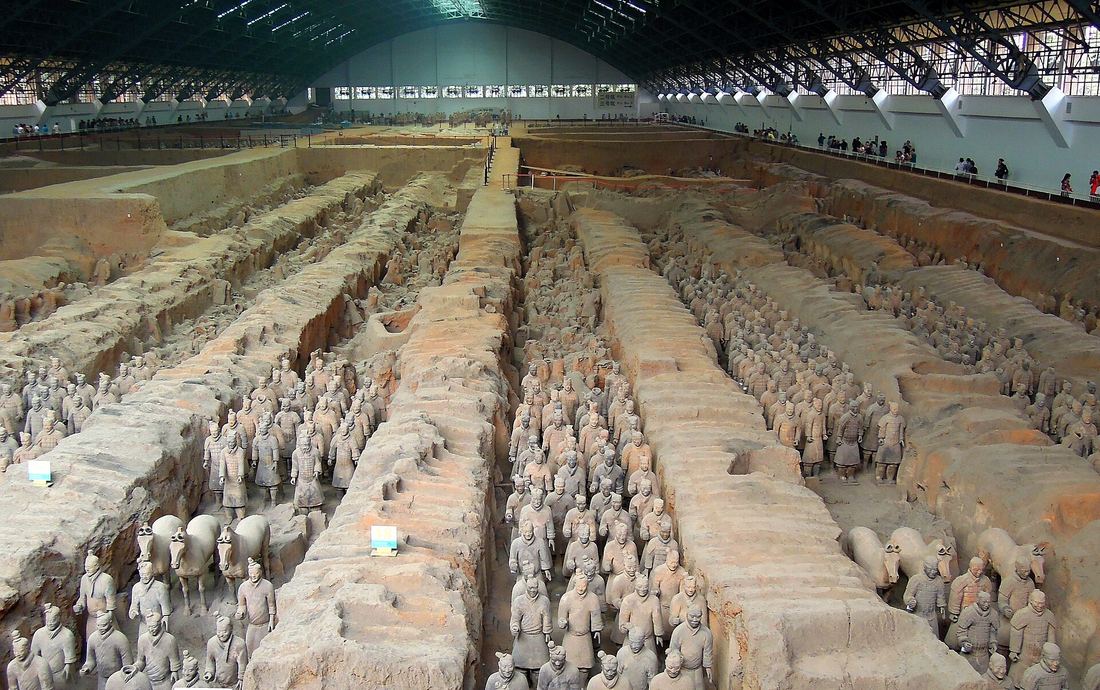
The museum consists mainly of three pits plus a bronze chariot hall. The usual advice is to see Pit Three and Pit Two first and leave Pit One until last. The reason is the build-up: Pit One is the largest and the most overwhelming, and seeing it first makes the other two feel flat. Going small to large, partial to whole, layers the experience instead of spending it in the first ten minutes.
Pit One is the vast hall you have seen photographed endlessly, with ranks of infantry and chariots laid out in long trenches. Pit Two shows a mixed formation of crossbowmen, cavalry and chariots, and it is also the focus of much recent excavation work. Pit Three is the smallest and is understood as a command structure, so what you are reading there is organisation rather than scale.
The bronze chariot hall is often rushed through and is worth real time. The details on those two bronze teams, the mechanism of the canopy, the way the harness is assembled, are the most direct window into Qin craftsmanship. Plenty of visitors see Pit One and leave, missing the finest objects in the building.
One last practical suggestion: hire someone who can explain it. A large part of the value here lies in knowing what you are looking at. The same rows of clay figures with and without commentary are two entirely different experiences, and this is the single addition we most often recommend on historical itineraries like Xi'an.
Tickets and Transport: Where It Goes Wrong
Terracotta Army tickets are booked under a real-name system with limited quotas, and peak periods, especially weekends and public holidays, are tight. Book in advance through the official channel and carry the original ID document you booked with. Turning up and hoping is the most common way to fail, and there is no fallback: there is no second Terracotta Army nearby.
There are several ways to get there. From Xi'an North station or the city centre you can take high-speed rail to Lintong and transfer, drive via the expressway, or use a tourist shuttle bus. Public transport is cheap but involves changes and takes longer. A private car costs more but gives you control over timing and can combine Huaqing Palace and Mount Li in the same day.
One detail that catches people out: although the Terracotta Army and Huaqing Palace are both in Lintong, there is still a drive between them, and each needs two to three hours. Many visitors assume that being in the same area means they will simply slot together, and without a planned order and timings, both end up rushed.
China Custom Tours, part of the JoyoTour group, handles historical itineraries like this by arranging reservations, vehicles and commentary together. Private vehicles take no strangers and drivers are kept separate from guides, and Hong Kong guests travel with a Cantonese-speaking guide and Taiwan guests with a Mandarin-speaking one. You are not dealing with ticketing or navigation on the ground. Quotations are itemised and there are no shopping stops.
The City Wall, the Bell Tower and the Muslim Quarter
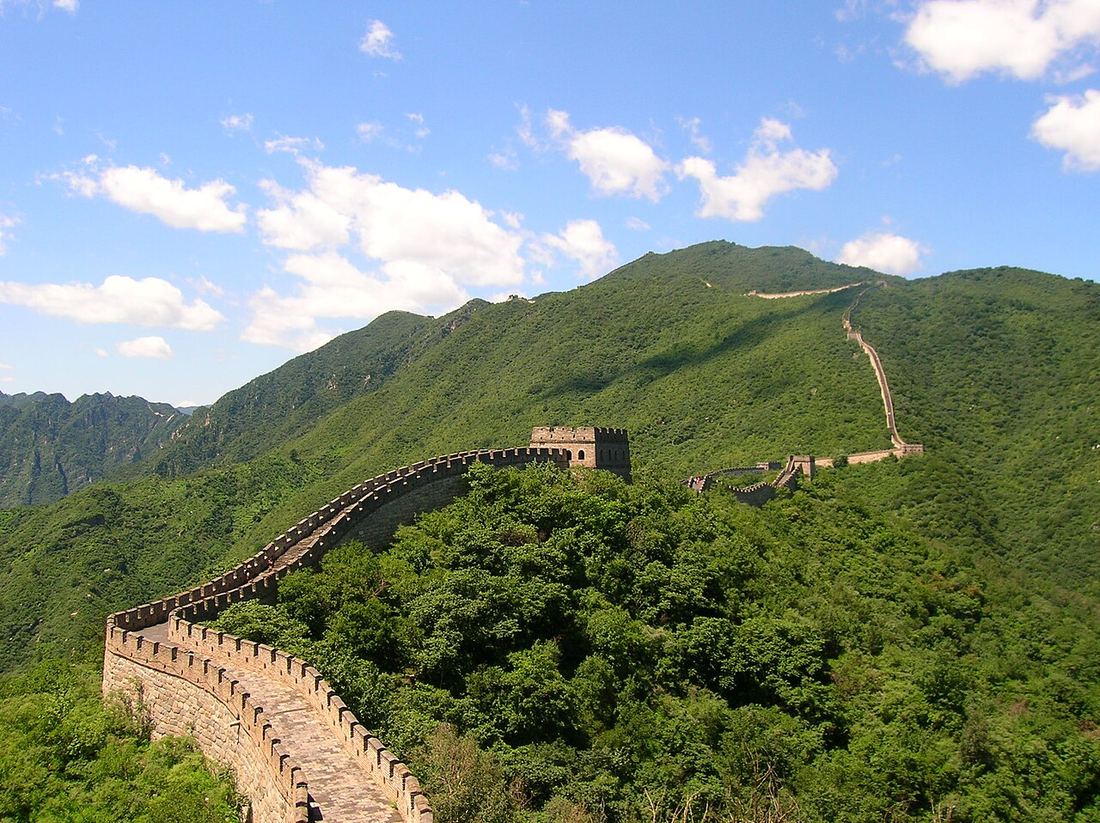
The Ming city wall is among the largest and best preserved ancient fortifications in China, roughly fourteen kilometres around, and walking the full circuit takes three to four hours. Most visitors cycle a section or simply walk part of it near the South Gate, which balances the experience against the time available.
Bicycle rental on the wall is popular, and tandem bikes especially so. Note that the surface is not perfectly smooth throughout, so watch for bumps, and that the wall offers almost no shade at midday in summer. Early morning or late afternoon is better on both counts, and the light is better too.
The Bell Tower and Drum Tower stand in the centre of the city and were the Ming era's timekeeping structures. They look their best lit up at night, and because they are close together they are usually visited as one stop. The Muslim Quarter runs behind the Drum Tower and is Xi'an's best known food street, extremely busy and thoroughly commercial.
Our advice on the Muslim Quarter is to treat it as somewhere to wander rather than somewhere to eat. The genuinely good food tends to be in the surrounding lanes rather than in the most prominent shops on the main drag. If you want a serious Shaanxi meal, have a guide take you to a place locals actually use, and the difference is considerable.
Shaanxi History Museum and the Stele Forest: Booking Is Everything
The Shaanxi History Museum is the indoor collection most worth half a day in the city. Its holdings run from Western Zhou bronzes through to Tang gold, silver and murals, arranged with clear chronology, and it is the most efficient way to understand Shaanxi and the central plains more broadly. The catch is popularity: free or low-cost slots are limited, booking ahead is normally required, and in peak season it can be very hard to secure one.
The trick is to be early and precise. Watch for the release time, use the real ID details of the person who will attend, and set up one or two backup dates. If you have three or four days in the city, put the museum on whichever day you can get a slot, rather than letting the ticket dictate the order of the whole trip.
The Stele Forest Museum sits near the South Gate of the wall and is known for its collection of inscribed steles, which appeals to anyone interested in calligraphy and historical documents. It draws far smaller crowds than the Shaanxi History Museum, so the visit is calmer. Without a particular interest in calligraphy, it can be skipped in favour of more time on the wall or at the pagoda.
The Big Wild Goose Pagoda stands in the south of the city, built in the Tang dynasty to house scriptures brought back from India, with a plaza and musical fountain nearby that come alive at night. It is close to the Shaanxi History Museum, so the two usually pair into a single Tang-themed half day.
Huaqing Palace, Mount Li and the Terracotta Army in One Day?
It is possible, but go in expecting a full day. Huaqing Palace is known for its Tang imperial hot springs and the history attached to them, and the grounds are substantial, taking about two hours with commentary. Mount Li can be climbed or reached by cable car, with views over Lintong and the Wei River plain. The Terracotta Army needs two to three hours. Add the drive from the city and back and the day is gone.
If you are interested in historical detail, that combination is worth it. If you mainly want to see the warriors, forcing Huaqing Palace and Mount Li into the same day means rushing all three. Our recommendation is to give one day to the Terracotta Army and Huaqing Palace, and decide on Mount Li based on energy and weather.
With more time, the better arrangement is to make Lintong its own day and give the city wall, the museum and the pagoda another day. That way each day has a theme: one is the grand Qin and Tang narrative, the other is the structure and daily life of the city itself.
There is also an alternative that is often overlooked. Around Xi'an lie major sites from other dynasties, including Han Yangling, Famen Temple and the Qianling mausoleum. On a four or five day trip, expanding in one of those directions usually rewards you more than squeezing two extra city sights into an already full day.
How Many Days? Two, Three and Four
Two days is the bare minimum: one for the Terracotta Army and Huaqing Palace, one for the city wall, the Bell and Drum Towers and the Muslim Quarter. You will touch the landmarks, but the museum and the pagoda essentially disappear, and the result is having been there rather than having understood it.
Three days is what we recommend to most travellers. Day one in the city for the wall and the towers, day two for the Terracotta Army and Huaqing Palace, day three for the Shaanxi History Museum and the Big Wild Goose Pagoda. The historical thread holds together, the pace is reasonable, and if the museum booking only comes through for one particular date there is still room to reshuffle.
Four days or more and the route can widen. The most common additions are Mount Hua to the east, or Famen Temple and the Qianling mausoleum to the west. Another option is to treat Xi'an as the start of the wider Silk Road line, continuing west through Baoji, Tianshui and Lanzhou into the Hexi Corridor. That route has excellent historical continuity but needs a longer holiday.
One thing to plan around: Xi'an is an inland city, hot in summer and dry and cold in winter, with spring and autumn the most comfortable. On a July or August trip, keep outdoor activity out of the middle of the day. In January, bring proper insulation, because the wind on the city wall and Mount Li is stronger than in the city centre.
Where to Stay: Bell Tower, South Gate or the Pagoda
Accommodation clusters in three areas. The Bell and Drum Tower district is the centre, convenient for transport and food and lively at night, at the cost of noise and traffic. The area near the South Gate sits against the city wall, with good atmosphere and the Stele Forest nearby. The Big Wild Goose Pagoda and Qujiang new district is newer, greener and close to the museum and the pagoda, which suits anyone wanting the evening fountain and lights.
The logic is simple. If the plan centres on city sights and street food, stay at the Bell Tower. If the museum and the pagoda are the priority, Qujiang runs more smoothly. If you have an early start for the Terracotta Army or a train to catch, think about the traffic heading out of the city.
Hotel standards vary more than visitors expect, and within the same district you will find international brands alongside tired local properties. In our itineraries we confirm each property individually, its exact location, room type, soundproofing and breakfast arrangements, rather than quoting a generic central same-category hotel. That matters in Xi'an, because some very well located hotels have rooms facing straight onto noisy streets.
If your leave falls during China's long public holidays, book earlier and expect noticeably higher prices. That is why we suggest fixing your dates early: the earlier they are set, the more room there is on both room types and price.
Arriving and Getting Around
Xianyang International Airport lies to the north-west, roughly forty minutes to an hour from the city depending on traffic. For rail, Xi'an North is the main hub, with frequent services east towards Zhengzhou and Beijing, west towards Baoji and Lanzhou, and south towards Chengdu and Wuhan. Less widely known is that rail connections also serve the Lintong direction, which can be more predictable than going purely by road.
Within the city, the metro and private cars do most of the work. The metro network has expanded quickly and reaches most central sights, which makes it a good way to avoid traffic, though the walk from station to sight can be long enough to matter with older relatives or luggage.
Where the itinerary includes the Terracotta Army, Mount Hua or Famen Temple, a private car earns its place: controllable timing, drop-off at the entrance, no dependence on schedules. With the Terracotta Army in particular, arriving early and arriving at midday are very different experiences, because the early slot lets you stay ahead of most group traffic.
China Custom Tours, part of the JoyoTour group, handles cities like Xi'an by combining airport transfers, city driving and out-of-town day trips on one itemised quotation, with drivers and guides as separate people, one consultant coordinating on WhatsApp, service hours of 09:00 to 21:00 Beijing time daily, and a 24/7 emergency response.
What to Eat in Xi'an
Shaanxi cooking is built on wheat, direct in style and generous in portion. The best known items are roujiamo, a filled flatbread often described as a Chinese hamburger, yangrou paomo, a lamb soup with torn pieces of flatbread, liangpi cold noodles, wide biangbiang noodles, and hulutou paomo. They are affordable and satisfying, and they also tend to be heavy on oil and salt.
If the seasoning is too much for you, ask for less salt and less chilli and most kitchens will oblige. Vegetarians have reasonable options among the noodles and cold dishes, but should ask whether the broth is meat-based, which matters especially in the paomo shops where the soup is the whole point.
The Muslim Quarter and Yongxing Fang are the two food areas where visitors concentrate. The Muslim Quarter is busier and broader, while Yongxing Fang is tidier and better suited to sampling several things at once. Both share the same problems: crowds and above-average prices. Eating well and cheaply still depends on going where locals go.
One very practical point: Xi'an restaurants queue at meal peaks, especially between about 18:30 and 20:00. If your days are full, move lunch earlier or later rather than spending it waiting for a table. That small adjustment routinely saves an hour.
Comparison Table: A Three-Day Xi'an Framework
The table below is the framework we use most often. Treat it as a starting point and adjust around your flight times, your booking results and your energy.
| Day | Focus | Notes |
|---|---|---|
| Day 1 | Arrival, city wall and the Bell and Drum Towers, Muslim Quarter or Yongxing Fang | If you land late, move the wall to the following evening instead |
| Day 2 | Terracotta Army including all three pits and the bronze chariots, plus Huaqing Palace; Mount Li if energy allows | Book tickets ahead and start early to stay ahead of group traffic |
| Day 3 | Shaanxi History Museum, Big Wild Goose Pagoda and surrounds; Stele Forest if interested | The museum requires advance booking, so the order may follow the slot you get |
| Day 4+ | Mount Hua, Famen Temple, Qianling, or continue west along the Silk Road corridor | For longer holidays and travellers who want the full historical thread |
A framework is only a framework. The same three days arranged around a morning arrival and an evening arrival look nothing alike, and whichever date the museum slot falls on will reshape the order. Working through exactly these adjustments is part of what we do at the planning stage.
Five Common Mistakes in Xi'an
The first is assuming the Terracotta Army is in the city centre. It is in Lintong, and getting there, seeing it and returning takes most of a day, so it has to be planned as a day of its own rather than an afternoon errand.
The second is buying tickets at the gate. Both the Terracotta Army and the Shaanxi History Museum use real-name advance reservation with limited quotas, and turning up without one often means not getting in at all, with no alternative on the spot.
The third is putting the Terracotta Army, Huaqing Palace and Mount Li into one day without planning the order. The result is three rushed visits and time lost in transit. The sequence and the timings need working out beforehand.
The fourth is eating only in the Muslim Quarter. It is better for wandering than for eating, and the genuinely good food tends to be in the surrounding lanes at more sensible prices. A local recommendation changes the experience.
The fifth is underestimating the summer heat and the winter cold. Xi'an is inland with wide temperature swings, and a plan that ignores the middle of the day in July or forgets warm layers in January will drain everyone quickly. These are the five points we raise most often before departure.
- Treat the Terracotta Army as a day of its own, not an afternoon add-on to a city day
- Book the Terracotta Army and the Shaanxi History Museum in advance, with backup dates ready
- Save Pit One for last; seeing Pits Three and Two first makes the experience build
- Put the city wall at dawn or dusk, for better light and to avoid the midday heat
- Set aside half a day for the Shaanxi History Museum; it is the fastest way to understand the city
Why a Tailor-Made Trip Pays Off Here
The difficulty in Xi'an is not deciding where to go. It is booking and sequencing. The Terracotta Army and the museum both run real-name reservations, the city and its outlying sites are far apart, and restaurants and attractions all queue at peak hours. Together those factors turn a trip that should be unhurried into one that is always running late.
China Custom Tours, part of the JoyoTour group, arranges it by putting reservations, vehicles, commentary and accommodation together. Private vehicles take no strangers and drivers are kept separate from guides, so nobody is driving while trying to find parking. Hong Kong guests travel with a Cantonese-speaking guide and Taiwan guests with a Mandarin-speaking one, so the historical commentary loses nothing in translation. There are no shopping stops and quotations are itemised.
Our service hours are 09:00 to 21:00 Beijing time daily, with a single consultant coordinating on WhatsApp and a 24/7 emergency response. On a history-focused trip, the real value of these arrangements is not being distracted by logistics. You only have to look, not manage.
The team was founded in 1999 and now includes 150 itinerary designers, with more than 100,000 guests served. The operating entity is Qinghai Youxuan Culture and Tourism Co., Ltd. If you want to link Xi'an into the wider Silk Road route, this is a line we handle often, running west from Xi'an all the way into the Hexi Corridor.
In Closing: Xi'an Rewards Understanding
Xi'an is easily treated as a transit city where you see the Terracotta Army in a day. Give it one or two days more and its layers become obvious, from Zhou and Qin bronzes and clay figures to Tang walls and pagodas, and on to today's street food and ordinary city life.
The same three days can be a sequence of photographs or a genuine attempt to understand. The difference is not how many sites you covered. It is whether you had time to stop and hear a story. That is the argument of this article.
If you already have rough dates and a day count, tell us what you have in mind. Within one working day we will send a day-by-day itinerary, an itemised quotation, and pacing suggestions adjusted for whoever is travelling with you.