- Zhangjiajie Is a Region, Not a Single Attraction
- The Three Core Zones: Wulingyuan, Tianmen and the Grand Canyon
- How Many Days? What Three, Four and Five Days Actually Buy You
- Where You Stay Decides How Much Time You Waste
- Two Days in Wulingyuan: Peaks Above, Stream Below
- Tianmen Mountain: Why It Deserves a Day of Its Own
- The Grand Canyon Glass Bridge and the Caves: Worth It?
- Fenghuang and Furong: Worth the Extra Drive?
- Booking, Tickets and Peak Season: Where It Goes Wrong
- Comparison Table: Sample Day Counts
- Who Zhangjiajie Does Not Suit, Honestly
- Why a Tailor-Made Trip Pays Off Here
- In Closing: Rhythm Beats a Longer List
Zhangjiajie Is a Region, Not a Single Attraction
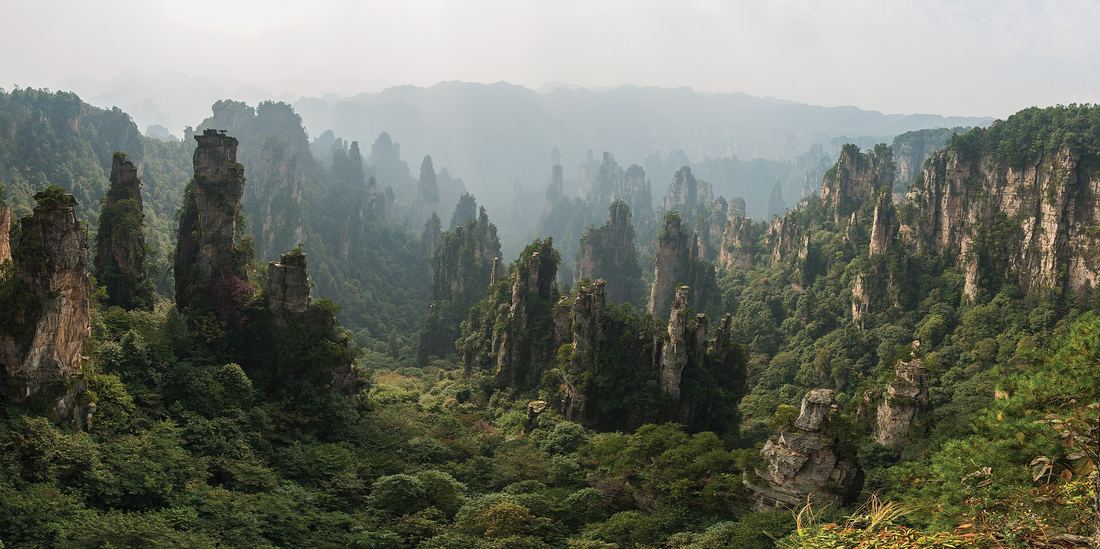
Most people picture Zhangjiajie as one photograph: sandstone pillars rising out of a sea of cloud. Arrive, and you discover the scenery is spread across several separate areas, each tens of minutes apart by road, each with its own ticket, its own internal transport and its own claim on your day.
That has a direct consequence. Two days here and four days here are not the same trip at different speeds; they are different trips. Two days is rushed and tiring, and you will almost certainly miss the best of it. Four days lets you walk the core of the national park properly and give Tianmen Mountain a day of its own.
More importantly, the terrain is vertical. You are not moving across a flat map but climbing and descending between clifftops, mid-level paths and valley floors, strung together by cable cars, lifts, shuttle buses and walking. Real timings are therefore much longer than the straight-line distances suggest.
So the first step in planning is not a list of sights. It is understanding the structure. Once the structure is clear, the number of days and the choice of hotel follow almost automatically.
The Three Core Zones: Wulingyuan, Tianmen and the Grand Canyon
Zhangjiajie splits into three usable blocks. The first is the Wulingyuan core, essentially the Zhangjiajie National Forest Park and its surrounds, including Yuanjiajie, Tianzi Mountain, Huangshi Village and the Golden Whip Stream. This is the reason Zhangjiajie exists on anyone's map, and it is the part inscribed as a UNESCO World Heritage site.
The second is Tianmen Mountain, sitting right beside the city and known for the Heaven's Gate arch, the cliff-edge glass walkways and a long high-mountain cableway. It is a separate mountain, roughly forty to sixty minutes by road from the forest park, and it is not a half-day stop in practice.
The third is the Zhangjiajie Grand Canyon and its glass bridge, along with cave attractions such as Yellow Dragon Cave. This block is more about single experiences and works well as a mid-trip change of pace or a wet-weather fallback.
Separate the three and you can see why we repeat one piece of advice constantly: do not schedule the forest park and Tianmen Mountain on the same day. They are far apart, each fills a day, and both involve queues. Cramming them together usually means seeing both badly.
How Many Days? What Three, Four and Five Days Actually Buy You
Three days is the highlights version: one day on Tianmen Mountain, one in the forest park core, one at the Grand Canyon or a cave. You will see the most recognisable scenery, but the pace is tight and there is almost no room for weather to misbehave.
Four days is what we recommend to most travellers. The extra day lets you split the forest park across two days, or place Tianmen Mountain on whichever day looks clearest and use the rest to chase better light and thinner crowds. Mountain weather changes fast, so a buffer day is insurance rather than waste.
Five days or more lets the route widen. The classic addition is south-west to Fenghuang Ancient Town, with Furong Town as a natural stop en route, producing a mountains-plus-river-town itinerary with more variety and a reason for the longer drive.
One further consideration: in peak season the main areas operate timed-entry booking and crowd controls. With too few days, a single unfavourable forecast or a sold-out slot leaves you almost no room to rearrange. That is where the extra day earns its keep.
Where You Stay Decides How Much Time You Waste
Accommodation in Zhangjiajie falls into two zones: the city, close to Tianmen Mountain, the railway station and the airport, and Wulingyuan, close to the national park entrance. Choose wrongly and you add one to two hours of driving every day, in the most tiring part of the schedule.
If you are spending two consecutive days in the forest park, staying in Wulingyuan makes obvious sense: you enter early, ahead of the traffic coming out from the city, and at the end of the day you are minutes from your room rather than an hour away. If your plan centres on Tianmen Mountain, or you have an early train or flight, the city is more practical.
On trips of five days or more we usually suggest moving once: two nights in Wulingyuan for the park days, then the night before departure in the city for Tianmen Mountain. One extra check-in sounds like a chore, but it saves far more in driving and fatigue than it costs in packing.
One easily overlooked point: hotel quality in the mountains varies enormously, and two properties on the same street can be very different in comfort. That is why we confirm each property individually when building an itinerary, rather than relying on a star rating or a name.
Two Days in Wulingyuan: Peaks Above, Stream Below
The forest park experience divides into two moods. Above, on the clifftops, the landmarks are Yuanjiajie and Tianzi Mountain, with wide views and dense pillars: the Zhangjiajie of most people's imagination. Below, along the valley floor, the Golden Whip Stream offers a gentler walk between the walls of rock.
A sensible sequence is to take the high ground first, using a cable car or the Bailong lift to reach Yuanjiajie and Tianzi Mountain, then spend the second day on the valley and Huangshi Village, mixing walking with rest. This balances the physical load rather than destroying everyone's legs on day one.
Inside the park, shuttle buses link the sections, and the routes and waiting points need to be understood in advance, or you can easily spend half an hour at the wrong stop. This is one of the clearest places where a tailor-made trip beats independent travel: a guide and driver who know the layout sequence the transfers so your time goes into looking rather than queueing.
One more practical note: cable cars and lifts can queue badly in peak season. Entering early and avoiding the mid-morning wave saves more time than any itinerary trick, which is why we build the day around the gate rather than around the map.
Tianmen Mountain: Why It Deserves a Day of Its Own
Tianmen Mountain is a different kind of experience from the forest park. Its selling point is verticality: a long, high cableway lifts you from the city to the summit, where cliff-hugging walkways and glass sections trace the rim, and the famous Heaven's Gate arch sits on the far side, reached by a staircase or an escalator cut through the mountain.
Many visitors budget half a day and find it takes a full one. Three reasons: the cableway runs on timed slots and queues, the summit walkways cover real distance, and the round trip to the arch consumes time of its own. Add an evening show and the day is full.
The best place to put Tianmen Mountain is arrival day or departure day, because both its start and end points are in the city, close to the airport and station. You can ride up on the afternoon you land, or finish it on the morning you leave, without dragging luggage across the region.
Weather affects Tianmen more than anywhere else here. Heavy fog or strong wind can close the cableway, and cloud can erase the view entirely. That is exactly why we keep a flexible day in the plan. Placing Tianmen Mountain on the clearest day is basic mountain craft.
The Grand Canyon Glass Bridge and the Caves: Worth It?
The glass bridge over the Grand Canyon is a popular single experience, and walking a transparent deck hundreds of metres above the valley floor is genuinely thrilling. It suits trips with spare days, or moments when you want something other than another clifftop.
Note that it uses timed booking and capacity limits, and in peak season it often needs to be reserved in advance. If you only have three or four days, the forest park and Tianmen Mountain are usually the better use of time. The bridge is a bonus, not a must.
Caves such as Yellow Dragon Cave are a different kind of option, and an excellent fallback when the weather turns. Underground, rain and wind do not matter, and the walking is comparatively easy, which makes caves a good buffer for families with older relatives or small children.
Overall, the value of these single-site additions depends on trip length and who is travelling. Short on days, cut them. Long on days, add them. That is the advice we give most often.
Fenghuang and Furong: Worth the Extra Drive?
With four days or more, extending south-west to Fenghuang Ancient Town is well worth it. The old town runs along the Tuo River, and its stilted houses and evening lights are the draw. Its real magic happens at dusk and dawn, precisely the hours when day-trippers have already left.
So our recommendation is unambiguous: if you go to Fenghuang, stay a night. A same-day return is possible but rushed, and it lands you there for the least interesting light. With an overnight it frequently becomes the most memorable stretch of the whole Hunan trip.
Furong Town sits between the two, known for its waterfalls and old streets, and works well as a half-day stop on the move. Pairing it with Fenghuang makes more sense than making a separate journey for it.
Transport from Zhangjiajie to Fenghuang can be by high-speed rail or private car, with timings depending on services and road conditions. This is one of the legs we arrange in advance, because a beautiful itinerary is useless if you cannot actually get there.
Booking, Tickets and Peak Season: Where It Goes Wrong
The largest planning risk in Zhangjiajie is not getting lost. It is arriving and discovering you cannot get in. In peak season the core areas, Tianmen Mountain and the glass bridge mostly operate timed reservations with limited quotas, and popular slots sell out early.
Ticket combinations are also more complicated than visitors expect. Different entrances and different routes correspond to different tickets, and without familiarity it is easy to buy the wrong one or miss a segment and end up queueing to buy it on the spot.
The other common error is underestimating holiday crowds. During China's long public holidays, a two-hour route can take half a day. If your leave falls inside one of those windows, the plan needs more buffer, or a deliberate shift to off-peak days and hours.
This is why we treat booking and ticketing as part of the itinerary. Reserve what needs reserving and shift what needs shifting before departure, so that on the ground you only have to walk, look and enjoy.
Comparison Table: Sample Day Counts
The table below shows the frameworks we use most often. Treat it as a starting point and adjust for who is travelling and how much walking they want.
| Days | Framework | Suits |
|---|---|---|
| 3 days | Tianmen Mountain, one full day in the forest park core, plus the Grand Canyon or a cave | Tight schedules and travellers who only want the signature views |
| 4 days | Two park days, one Tianmen day, one flexible day or the glass bridge | First-time visitors who want a calmer pace |
| 5 days | The four-day framework plus Fenghuang Ancient Town with an overnight, or a Furong stop | Travellers who want mountains and an old town without rushing |
| 6+ days | The five-day framework plus Changsha or western Hunan, forming a small Hunan loop | Longer holidays, photographers and slower travellers |
One caveat: a framework is only a framework. When we build an actual plan we resequence these blocks around your arrival time, your flight or rail services and the season's weather. The same four days arranged for a morning arrival and an evening arrival look nothing alike.
Who Zhangjiajie Does Not Suit, Honestly
The scenery is genuinely spectacular, and it also demands a certain level of fitness. Long staircases, repeated cable-car transfers and hours of walking are a real challenge for anyone with bad knees, limited mobility or advanced age. Saying so is not discouragement. It is what makes a good plan possible.
Travelling with older relatives or young children is entirely feasible, but the itinerary has to change: less valley walking, more use of cable cars and lifts, shorter days, and more rest and buffer built in. The same sights at a different tempo feel like a different trip.
For anyone uneasy with heights, the glass walkways and the bridge need some mental preparation. Most have alternative routes that bypass the glass sections, and explaining this in advance avoids an awkward moment on the day.
We raise all of this at the planning stage, including the daily walking distance and the approximate altitude change. Knowing what you are walking into is far more comfortable than finding out on the mountain.
Why a Tailor-Made Trip Pays Off Here
The hard part of Zhangjiajie is not deciding where to go. It is stitching the pieces together. There is no convenient public transport network between the zones, connecting cable cars and shuttle buses requires local familiarity, and peak-season reservations reward experience and timing. Together those factors eat the most precious thing an independent traveller has: time.
China Custom Tours, part of the JoyoTour group, approaches mountain itineraries like this by arranging transport, tickets and accommodation as one package. Private vehicles take no strangers, and drivers and guides are separate people, so nobody is navigating while driving. Hong Kong guests travel with a Cantonese-speaking guide and Taiwan guests with a Mandarin-speaking one, so nothing is lost in translation.
Our standards are no shopping stops anywhere on the itinerary, itemised quotations published up front, a single consultant coordinating on WhatsApp throughout, service hours of 09:00 to 21:00 Beijing time daily, and 24/7 emergency response. In a flat city these might read as extras. In the mountains, when the weather turns, they are the difference between calm and chaos.
There is one final advantage. Mountain weather demands improvising. A guide who knows the area will tell you the night before which zone to take first and which day looks best for Tianmen Mountain. That flexibility is the most concrete thing a tailor-made trip buys.
- Keep the forest park and Tianmen Mountain on separate days rather than forcing them together
- Let your hotel follow your plan: Wulingyuan for park days, the city for Tianmen and travel days
- Put Tianmen Mountain on arrival day or departure day, since it starts and ends in the city
- Keep one flexible day in the plan; mountain weather is unpredictable and buffers are not waste
- Handle peak-season timed bookings early and confirm exactly which ticket combinations you need
In Closing: Rhythm Beats a Longer List
Most people planning Zhangjiajie ask how many sights they can fit in. What actually determines whether the trip is good is rhythm: whether you reach the right place at the right time, in the right order.
The same four days can be arranged so tightly that nobody wants to take a photograph, or loosely enough that someone remembers a sea of cloud for the rest of their life. The difference is not the list of sights. It is the space left between them. That is the whole argument of this article.
If you already have rough dates and a day count, tell us what you have in mind. Within one working day we will send a day-by-day itinerary, an itemised quotation, and pacing suggestions adjusted for whoever is travelling with you.