- Why Chengdu Became a Second Gateway into China
- Chengdu's Two Airports: Tianfu (TFU) and Shuangliu (CTU)
- How Long It Takes to Reach the City
- What to Send Us for a Chengdu Airport Pickup
- Three Ways into the City
- Luggage and Vehicle Class: the Overlooked Cost
- Chengdu to Jiuzhaigou: Three Routes Compared
- The Western Highlands: Pace Matters More Than the Itinerary
- The Panda Base: Timing Beats Everything
- Seasons and Weather in Sichuan
- Payments, Connectivity and Practical Preparation
- Building Chengdu into a Wider Trip
- Practical Details Guests from Hong Kong and Taiwan Ask About
- In Closing: Get the First Hour Right
Why Chengdu Became a Second Gateway into China
For years, travellers from Hong Kong and Taiwan entered mainland China through Shanghai, Beijing or Xiamen. Chengdu has climbed steadily since: more direct flights, a calmer pace, gentler prices, and above all a position as the gateway to the west. Jiuzhaigou, Huanglong, Mount Siguniang, Daocheng Yading and Seda all start from here.
There is a more practical reason too: altitude. Plenty of people want the highlands without spending their first night at 3,000 metres. Chengdu sits at around 500 metres, which makes it an excellent acclimatisation stop. Two nights here before heading west changes how your body responds, and it is the single most useful planning decision we make on western Sichuan itineraries.
The catch is the airport structure. Tianfu and Shuangliu both operate, their domestic and international roles are still shifting, and they sit more than 60 km apart. This guide deals with that, and with the onward logistics to Jiuzhaigou and the highlands.
Chengdu's Two Airports: Tianfu (TFU) and Shuangliu (CTU)
Shuangliu International Airport (CTU) is the older field, roughly 16 km from the centre, and for years it handled everything. Tianfu International Airport (TFU) is the new one, out towards Jianyang, about 50 km from the centre, and it now carries most international and regional flights.
That is a threefold difference in distance, and it shows. Shuangliu to the centre is around 30 minutes off-peak. Tianfu to the centre is an hour or more off-peak, and up to ninety minutes when traffic is bad. Both count as arriving in Chengdu, but day one feels entirely different.
One detail worth knowing: three metro lines serve the airports. Line 10 reaches Shuangliu, Line 18 reaches Tianfu, and Line 19 connects both. Lines 18 and 19 run express trains that skip intermediate stops, and the Line 19 express links the two airports in roughly 30 minutes. So even if you land at the wrong one, it is solvable; you simply need the time.
One useful rule when booking flights: if your trip heads west immediately, or your first night is central, Shuangliu is clearly better value. If only Tianfu has a direct flight from your city, accept the extra hour and arrange the pickup properly.
How Long It Takes to Reach the City
Clear numbers beat vague reassurance. The table below gives our normal-traffic estimates. Peak hours, roughly 7:30 to 9:30 and 17:00 to 19:30 on weekdays, add 30 to 40 percent.
| Destination | From Shuangliu (CTU) | From Tianfu (TFU) |
|---|---|---|
| Chunxi Road / Taikoo Li | about 30-45 minutes | about 60-85 minutes |
| Tianfu Square / People's Park | about 25-40 minutes | about 60-80 minutes |
| Wuhou Shrine / Jinli | about 30-45 minutes | about 65-90 minutes |
| Kuanzhai Alley | about 30-45 minutes | about 65-90 minutes |
| Chengdu East railway station | about 35-50 minutes | about 55-80 minutes |
| Panda Base (north of the city) | about 45-60 minutes | about 80-105 minutes |
| Dujiangyan / Qingcheng Mountain | about 70-90 minutes | about 100-125 minutes |
These are driving times only, excluding baggage reclaim and walking out of the terminal. On an international arrival, allow 45 to 75 minutes from touchdown to the arrivals hall, covering taxiing, disembarking, immigration queues and the belt, and longer when several flights land together.
So do not treat landing time plus one hour as your hotel arrival time. Add the arrival formalities, the drive and a 30-minute buffer. It looks conservative on paper, and it is often the difference between a calm first evening and a rushed one.
What to Send Us for a Chengdu Airport Pickup
The hard part of a pickup is not the car, it is matching information. A driver finds you by flight number and terminal, not by the colour of your coat. The more precise the details, the faster the meeting.
- Flight number and scheduled landing time, so the driver can track the actual arrival
- Which airport and which terminal - Tianfu has T1 and T2, Shuangliu has T1 and T2
- Number and size of bags, which determines the vehicle class
- Hotel name and full street address, since Chengdu has several similar hotel names
- A mobile number or WhatsApp that will be reachable on landing
If the flight is delayed or rescheduled, send the new details and nothing needs renegotiating. Our pickups follow the actual arrival time: the driver tracks the flight and waits in the arrivals hall with a name board.
Tell us in advance about late-night arrivals. Metro Line 18 from Tianfu stops at around 23:30, after which you rely on airport shuttle buses, some of which run around the clock, or a car. A late-night ride from Tianfu into the centre can easily reach 150 to 200 RMB given the distance, so build it into the budget.
One small detail: the arrivals level has several exits, and without an agreed meeting point drivers and guests can miss each other. We put the meeting point, including the exit number and a nearby landmark, in the confirmation message sent before departure. It saves ten minutes of phone calls in a crowd.
Three Ways into the City
Chengdu's metro has expanded quickly and the airport lines are workable, so whether you need a pickup depends on your arrival time, your luggage and who is travelling with you.
| Option | Advantages | Drawbacks | Best for |
|---|---|---|---|
| Metro (Lines 10, 18, 19) | Cheap, predictable, unaffected by road traffic | Changes required, awkward with luggage, no service after the last train | Light packers, daytime arrivals, one or two guests |
| Taxi or ride-hailing | Door to door, flexible | Payment and app must be set up, peak queues, late-night surcharges | Guests who already have payments and apps working |
| Pre-arranged pickup | Door to door, driver meets you with a board, price agreed in advance, no luggage worries | Costs more than the metro | Older relatives or children, heavy luggage, late arrivals, tight connections |
In our experience, two people landing in daylight and staying near Tianfu Square or Chunxi Road do fine on the metro with one or two changes. Four or more with large cases, or any arrival after 22:00, is a different story. Then a pickup saves not only time but the energy of dragging luggage through an unfamiliar city.
One underrated case: connecting straight to a high-speed train the same day. Chengdu East is a huge station, and getting from the entrance to the right departure gate involves a walk plus security, so allow 40 minutes or more. A pickup that drops you near the station entrance is far more reliable than working it out yourself.
Luggage and Vehicle Class: the Overlooked Cost
Transfer pricing depends mainly on vehicle class, number of days and hours used, not on distance alone. What drives class is seat count and luggage space, and those are the two things guests most often underestimate.
A concrete example: four guests from Hong Kong, each with one checked bag and one cabin bag. Four checked bags fill a standard sedan's boot, and the cabin bags end up on laps. That needs a seven-seat MPV, and the price reflects it. If nobody mentions this up front, you discover it at the kerb, and swapping vehicles costs both money and time.
Our advice is to state your luggage honestly to your consultant, cabin bags and camera gear included. Concealing it never saves money; it just gets you a less comfortable car. If you are heading to Jiuzhaigou or the highlands mid-trip, large cases can stay in hotel storage in Chengdu, which brings the vehicle down a class and the price with it.
Chengdu to Jiuzhaigou: Three Routes Compared
This is the most common question about Sichuan. Jiuzhaigou is not far as the crow flies, but the roads are mountainous with significant altitude change. There are three practical approaches: fly, take the high-speed rail plus a shuttle, or drive the whole way by private car.
Flying is fastest, about an hour to Jiuzhai Huanglong Airport, but that airport sits at roughly 3,400 metres, weather disrupts it often, cancellations and delays are not rare, and you still need a road transfer to the valley. For anyone sensitive to altitude, going from 500 metres to 3,400 in one hop is uncomfortable.
High-speed rail is the newest and most underrated option. The line from Chengdu to Huanglongjiuzhai station is open, it is fast and punctual, and you transfer by shuttle at the station. The advantage is handing the most tiring mountain stretch to the railway. The drawback is that the shuttle still needs arranging, and peak-season seats are tight.
| Option | Approximate time | Advantages | Watch out for |
|---|---|---|---|
| Flight to Jiuzhai Huanglong | about 1 hour flying, 4-5 hours including transfers | Fastest | Airport at about 3,400 metres, weather disruption, delays |
| High-speed rail plus shuttle | about 2 hours plus shuttle, 4-5 hours door to door | Punctual, comfortable, little weather risk | Peak-season tickets are tight, shuttle must be pre-arranged |
| Private car all the way | about 8-10 hours one way | Stops at Dujiangyan, Diexi Lake, Songpan old town | Long mountain mileage; keep driver and guide separate |
The appeal of driving is that the road itself becomes the itinerary. On the Chuanzhusi and Songpan route you pass Diexi Lake, the Songpan town walls and Chuanzhusi, places group tours rarely stop at. But eight to ten hours of mountain driving each way is not light, which is precisely why we insist that driver and guide are separate people. One person doing both, concentrating on mountain roads and narrating at the same time, is a genuine fatigue risk.
Our usual recommendation is to mix the two: go in by rail or air and save your energy for the valley, come out by private car and take the road slowly through Songpan and Diexi. You get both experiences without one punishing day.
The Western Highlands: Pace Matters More Than the Itinerary
Heading west from Chengdu, altitude climbs from 500 metres to 3,000 and 4,000. Daocheng Yading, Mount Siguniang, Seda and Xinduqiao are all high. Go up on day one and the body tends to protest on the second night.
A more sensible sequence: one or two nights in Chengdu, then Dujiangyan or Qingcheng Mountain at 700 to 1,000 metres, then a push into the 2,000 to 3,000 metre band, and only then higher ground. That extra low night looks like wasted time and typically saves a day of altitude discomfort.
Three things get amplified at altitude: a cold, dehydration and lack of sleep. A cold is trivial at sea level and can be serious at 4,000 metres. So on western Sichuan itineraries we deliberately separate long driving days from high-altitude nights, rather than having guests sit in a car all day and then sleep at 4,000 metres.
If older relatives or anyone with a cardiac history are travelling, be more conservative. In that case we usually keep the focus on Jiuzhaigou and Huanglong, at roughly 3,000 to 3,500 metres, rather than Daocheng Yading, where parts of the route exceed 4,000, and we build in the option to turn back.
The Panda Base: Timing Beats Everything
The Chengdu Research Base of Giant Panda Breeding, north of the city, is one of Chengdu's most popular sights. It has a very clear characteristic: pandas are most active in the morning and mostly asleep after midday. What time you go matters more than whether you go.
Our advice is to enter at opening and work backwards from the far end, starting with the nursery and the enclosures for young pandas. Between 08:30 and 10:00 the pandas feed and move about; after 10:30 the scene becomes, frankly, a field of sleeping pandas. Opening times shift with the season, and peak season starts earlier.
An alternative is the Dujiangyan base, often called the Panda Valley, which is newer, more spacious and less crowded, and close to Dujiangyan and Qingcheng Mountain, so it pairs well with a Dujiangyan day. If you want pandas without the crush, it is worth considering.
Panda base tickets normally require advance real-name booking and sell out quickly in high season. We handle timed bookings of this kind once an itinerary is confirmed and record the slots in your itinerary document, so nobody arrives to find the day sold out.
Seasons and Weather in Sichuan
Sichuan is a large province, so the best time to visit depends on where you are going. The Chengdu plain has four distinct seasons without extremes: March to May and September to November are pleasant, summer is humid with little sun, and winter is grey and damp but rarely snowy.
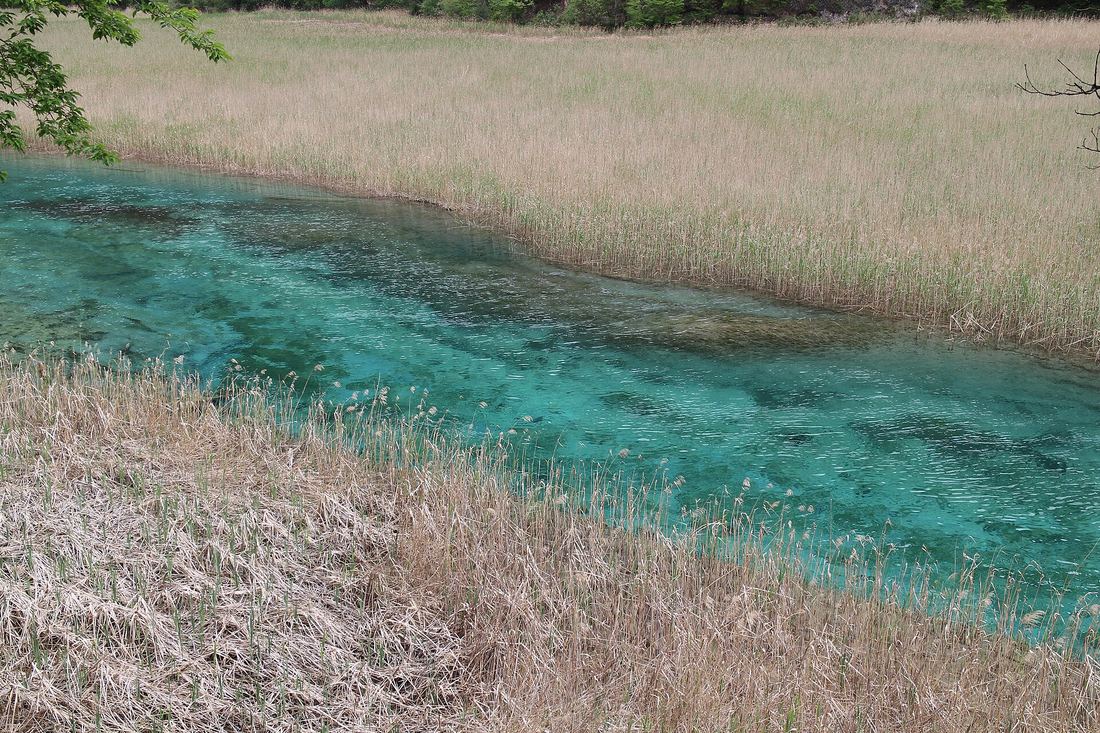
Jiuzhaigou peaks in autumn, mid-October to early November, when the coloured forest reflects in the lakes. Summer brings the fullest water and the most dramatic waterfalls, along with the largest crowds. Winter closes some areas but offers quiet snow scenes. Spring runs low on water and colour.
The western highlands have a narrower window. May to October is broadly workable, though July and August are the rainy season, when landslides and road closures are common. From November to April, some passes are restricted or closed by snow. If Daocheng Yading or Seda are on your list, avoid the rainy season and keep a spare day in the plan.
One more point: ultraviolet light at altitude is far stronger than on the plains, clouds notwithstanding. Hats, sunglasses and sunscreen are not optional in western Sichuan. That is not an exaggeration; it is why guests come back every year complaining about sunburnt faces.
Payments, Connectivity and Practical Preparation
Like other large Chinese cities, Chengdu runs on mobile payment. Alipay and WeChat Pay both support foreign cards, but first-time registration usually requires identity verification, which is unpleasant to do after landing. Register and link your card at home, then test a small payment once you are online at the airport.
On connectivity, Hong Kong and Taiwan roaming plans and many eSIMs handle the messaging and map services you are used to, while switching to a mainland SIM restricts some of them. This is a practical matter rather than a political one: if you need WhatsApp and Google Maps, confirm before departure that your plan covers them.
One Chengdu-specific note: the food is genuinely spicy, and mild means something different here than in Hong Kong or Taipei. If older relatives or children cannot take heat, ask for no chilli or a clear broth rather than less spicy. When we arrange Sichuan restaurants we confirm the heat tolerance of the group before choosing the menu.
One last thing: Chengdu's teahouse culture deserves half a day. Heming Teahouse in People's Park and the old teahouses of Pengzhen are ordinary daily life rather than staged attractions. Guests often name that unhurried afternoon as the part of the trip they remember longest.
Building Chengdu into a Wider Trip
Chengdu is western China's rail hub. High-speed trains run north to Xi'an, east to Chongqing and south to Kunming and Guiyang, which makes the city well suited to sitting in the middle of a multi-city itinerary rather than only at one end.
Three combinations come up most often. Chengdu and Chongqing, one to one and a half hours apart by rail, are two very different cities worth seeing together. Chengdu and Xi'an, three to four hours apart, pair the Three Kingdoms and classical poetry with the Qin and Tang dynasties. And Chengdu with Jiuzhaigou and Huanglong covers the province's own highlights.
If time allows, treat Chengdu as a buffer before the highlands rather than a transit stop. Guests who initially think an extra night here is wasted consistently say afterwards that it was the best night they added.
China Custom Tours, part of the JoyoTour group, handles Chengdu arrivals end to end: airport pickup, city cars, private vehicles onward to Jiuzhaigou and the western highlands, and intercity handovers, all from one team. No shopping stops, no strangers sharing your vehicle, and driver and guide are separate people, with a Cantonese-speaking guide for Hong Kong guests and Mandarin for Taiwan guests. A single consultant stays with you on WhatsApp throughout, quotes are itemised, service hours are 09:00 to 21:00 Beijing time daily, and emergency response runs around the clock.
Practical Details Guests from Hong Kong and Taiwan Ask About
First, documents. Hong Kong guests travel on the Mainland Travel Permit for Hong Kong Residents and Taiwan guests on the Taiwan Compatriot Permit, and both work for hotels, rail tickets and attractions in Chengdu. What matters is the validity date and the exact spelling of your name, because rail and air ticketing matches the permit number and name character for character.
Second, station choice. Chengdu has several rail stations, including Chengdu East, Chengdu South and Chengdu West, and different directions depart from different ones. Chengdu East has the most services and causes the most confusion. After booking, check the departure station name rather than assuming the word Chengdu is enough.
Third, hotel eligibility. The great majority of mainland hotels accept Hong Kong and Taiwan guests, but some small guesthouses and hostels have a limited registration scope. Confirming this before booking is a standing step in how we arrange accommodation.
Fourth, ride-hailing pickup zones. At Tianfu, app-based pickups use designated parking levels; Shuangliu has its own designated area. Finding the pickup point for the first time with luggage can take fifteen minutes on its own, which is one concrete reason guests choose a pre-arranged pickup.
In Closing: Get the First Hour Right
Planning Chengdu is less about the list of sights than about connections. Which airport, what time you land, how much luggage, and where you sleep the first night: combined, those four decide whether day one is an easy arrival or two hours of shuffling with bags.
Our advice is simple. Confirm those four things, then hand the pickup to someone who knows Chengdu. Save the rest of the day for hotpot, teahouses and pandas.
If Chengdu is part of a wider Sichuan or western highlands trip, send us your dates, group size and the places you have in mind. We will come back within one working day with a day-by-day itinerary and a clear quote covering pickup, cars, accommodation and any tickets that need advance booking.