- Breaking the safety question into three real questions
- Security checks: what they mean in practice
- Kanas: the best-known destination in northern Xinjiang
- Hemu village: worth a night, with realistic expectations
- Season: when Kanas looks its best
- Trip lengths and route logic
- Transport: why flying plus a private car is the norm
- Food: heavy on lamb and beef, so flag requirements early
- Who Xinjiang suits, and who it does not
- Cost and how to read a quote
- In closing: set expectations correctly and Xinjiang rewards you
Breaking the safety question into three real questions
Is Xinjiang safe is too broad a question to answer well. Split it into three and it becomes much clearer. What is the security situation in tourist areas? What is daily life like in the cities? And what practical inconveniences will a visitor actually encounter?
The short answers: security in tourist areas and cities is good, and the probability of a visitor encountering a security problem is very low. At the same time, Xinjiang has a noticeably higher density of security checks than other Chinese provinces, and that produces real effects on timing, process and luggage. Both statements are true and they are not in conflict.
So this article will not simply say it is very safe. It sets out what you will actually encounter, so you can judge whether it suits you.
Security checks: what they mean in practice
Checks in Xinjiang cover a wider range of situations than elsewhere. Passengers must get out of the vehicle and register when entering petrol stations. Some roads have checkpoints where identity documents must be shown. Shopping centres, hotels and scenic areas require bag screening. Some areas impose strict restrictions on drones and similar equipment.
None of these processes is complicated in itself, but they consume time. When planning a Xinjiang itinerary it is therefore not enough to add up driving times; check and registration time must be included. In our experience, allowing half an hour to an hour of buffer per day is realistic.
The other practical effect concerns documents. In Xinjiang your passport or permit should be on your person at all times, not in checked luggage and not left at the hotel. Hotel check-in, refuelling, checkpoints and scenic-area ticketing may all require it. Keep a photocopy on your phone as well, in case the original is lost.
- Carry your identity document at all times rather than leaving it in luggage or the hotel
- Keep a photo of both sides of the document on your phone
- Allow 30 to 60 minutes of buffer per day for checks and registration
- Drone and satellite-phone use is strictly restricted; confirm before departure
Kanas: the best-known destination in northern Xinjiang
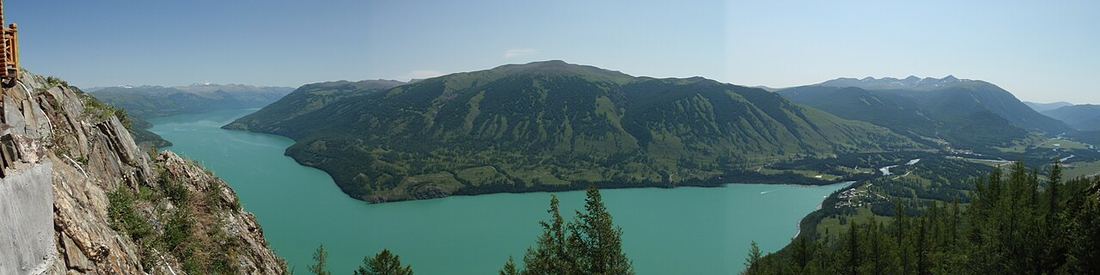
Kanas sits at the far northern edge of Xinjiang, close to the borders with Kazakhstan, Russia and Mongolia, and is China's only lake belonging to the Arctic Ocean drainage system. It is surrounded by birch and larch forest, which turns gold and orange in autumn, while the water shifts between blue and green depending on minerals and light. The visual signature is unmistakable.
The main viewpoints inside the scenic area include the fish-viewing platform, which overlooks the whole lake and requires climbing 1,068 steps, and the three bays known as Shenxian, Yueliang and Wolong. Walkways and shuttle buses connect the bays, and half a day to a full day is comfortable.
One thing to know in advance: Kanas is about 700 km from Urumqi, a full day by road. The most efficient approach is therefore a domestic flight plus a private car — fly to Kanas or Altay airport first, then transfer by road. That is the central consideration in our Xinjiang planning: spend the time at the destination, not on the highway.
Hemu village: worth a night, with realistic expectations
Hemu is a Tuvan village near Kanas and one of the few Tuvan settlements in China. It is best known for its morning mist, when fog fills the valley and mixes with smoke from the wooden houses — the reason many photographers make the journey.
Seeing that mist requires staying overnight. That is our standard approach: one night in Hemu, then up to the viewpoint at first light. A same-day visit makes the mist impossible, since it appears around sunrise and the drive in from Burqin or Kanas takes one to two hours.
Accommodation standards need adjusting. Hemu is dominated by guesthouses with simpler facilities than city hotels. Our selection criteria are a private bathroom and reliable heating, but room size, sound insulation and hot-water consistency may all fall short of a city hotel. What you get in exchange is the night sky and the morning mist. It is a trade.
Season: when Kanas looks its best
Kanas changes so much through the year that different months feel like different places. June to August is the green summer, cool and comfortable, and a genuine escape from the heat. Mid-September to early October is the golden birch autumn, the most famous and most crowded period. Winter brings snow and few visitors, but some roads close.
If autumn colour matters, aim for roughly 15 September to 5 October, with the precise timing depending on that year's temperatures — an early cold snap brings earlier colour. Accommodation and flights for that window need booking well ahead, and the national holiday from 1 to 7 October brings a sharp spike.
If you do not need autumn colour, June to August is in fact an excellent choice: comfortable temperatures, long daylight hours, and green forest and grassland, with fewer people than in autumn. For families with older relatives or children, summer in Xinjiang is easier to organise than autumn.
Trip lengths and route logic
| Option | Days | Covers | Suits |
|---|---|---|---|
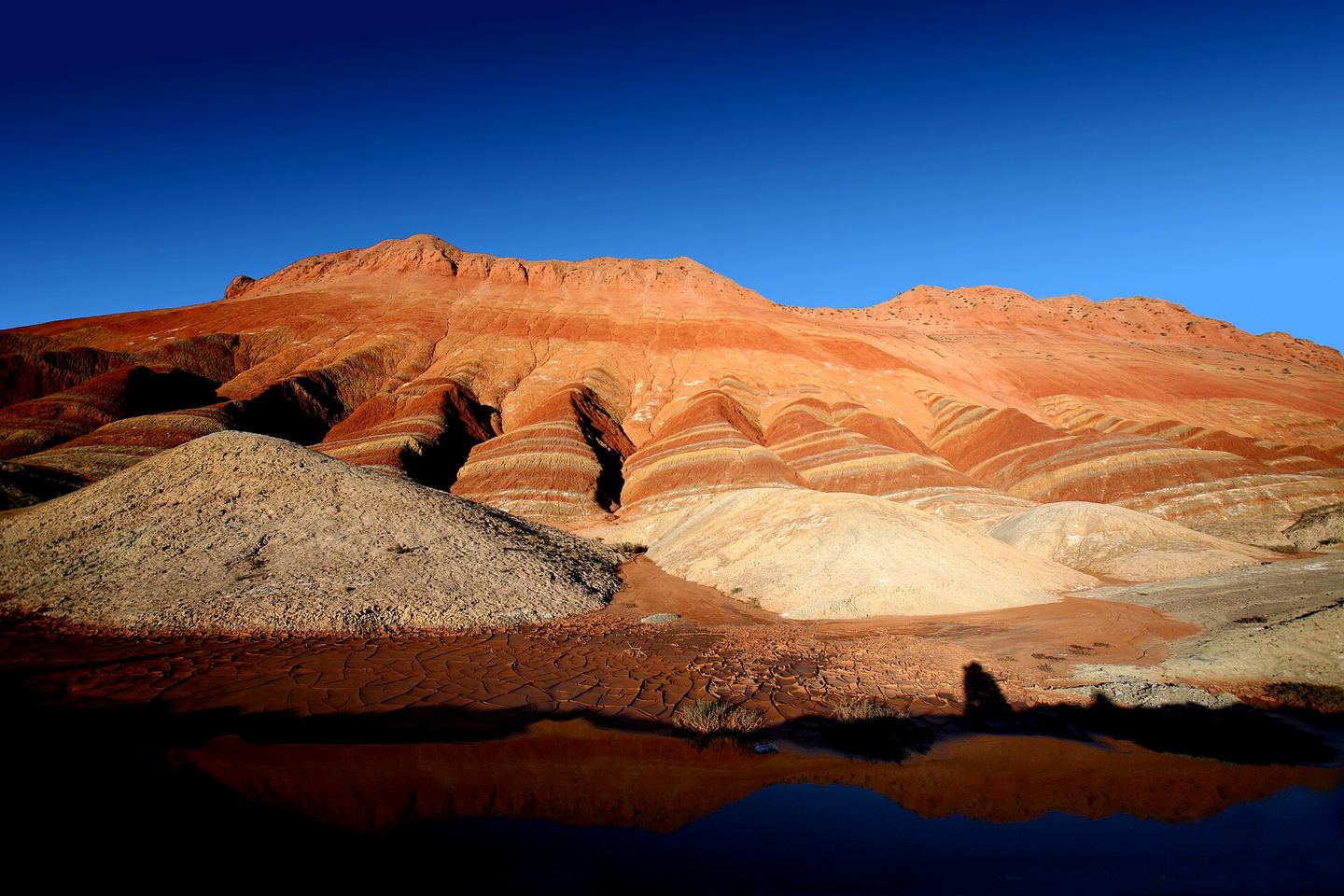
| Northern Xinjiang highlights | 8–9 | Urumqi, Kanas, Hemu, Wucaitan, Tianchi | First visit; the best-known sights |
| Northern Xinjiang in depth | 10–12 | Adds Koktokay, Sayram Lake, Nalati | Generous time; unhurried |
| Southern Xinjiang | 10–14 | Kashgar, Pamir plateau, Taklamakan | Interested in culture and landform; comfortable with long drives |
Most first-time visitors choose the northern highlights. The core is Kanas plus Hemu plus the Urumqi area, and eight to nine days is comfortable. With only six days, keep to Kanas and Hemu and compress Urumqi to arrival and departure days.
Southern Xinjiang is an entirely different route. Kashgar's old town, the Pamir plateau and the Taklamakan desert deliver intense cultural and landscape experiences, but the distances are longer and the physical demands higher. With ten days or more and an interest in Silk Road history, it justifies a separate trip.
Transport: why flying plus a private car is the norm
Xinjiang is China's largest province-level division, about one sixth of the country. That scale determines the transport logic: cities are hundreds of kilometres apart, and the distances between sights are considerable. Public transport works between the main cities but is far too slow to cover destinations like Kanas and Hemu.
The most efficient combination is a domestic flight plus a private car: use flights for the long legs, such as Urumqi to Kanas or Altay, and a car for movement within and around the scenic areas. That compresses a full day of highway driving into one or two hours and gives the time back to the destination.
Worth noting is that domestic flights in Xinjiang are more weather-sensitive, particularly in winter and spring. Do not schedule connections too tightly, and avoid arranging a heavy programme on the day of a flight. We generally leave the arrival day light to absorb any delay.
Food: heavy on lamb and beef, so flag requirements early
Xinjiang food is built on lamb, beef, wheat noodles and pilaf, with robust seasoning. For anyone who enjoys meat this is a highlight — kebabs, big-plate chicken, hand-pulled pilaf rice and naan are all distinctive. For vegetarians, or travellers who do not eat beef or lamb, requirements must be raised in advance, because finding an alternative restaurant in Kanas or Hemu at short notice is not realistic.
Our practice is to collect dietary requirements at the itinerary confirmation stage and adjust accommodation and dining accordingly. It sounds minor, but across a multi-day trip, one inedible meal shapes the mood of an entire day.
One further practical note: Xinjiang runs on a later daily rhythm than the rest of China, even though the official time is Beijing time. Dinner at eight or nine in the evening is normal. Your stomach will need a day or two to adjust.
Who Xinjiang suits, and who it does not
It suits travellers who can accept long transfers, are unbothered by security checks, enjoy natural landscapes and cultural difference, and have eight days or more. Xinjiang's scenery is on a grand scale and needs time to register.
It suits less well those with only four or five days, anyone who prioritises efficiency and comfort above all, travellers irritated by check and registration procedures, or those hoping to see a different category of sight every day. Xinjiang's landscapes concentrate on grassland, lake, forest and desert, and its variety differs from the Qinghai–Gansu route.
With only five or six days I would suggest a different direction. The Qinghai–Gansu Grand Loop delivers more variety in the same window with considerably better transport efficiency. China Custom Tours runs both Xinjiang and Qinghai–Gansu routes, so we can advise on which suits your dates rather than pushing one.
Cost and how to read a quote
Xinjiang costs come from three places: domestic flights, such as Urumqi to Kanas or Altay; scenic-area tickets and shuttle buses, which are not cheap at Kanas and Hemu; and vehicle and driver, given the number of long-distance days. Together these make per-person costs higher than a Qinghai–Gansu trip of the same length.
Reading the quote follows the same logic as anywhere: ask for it itemised, and clarify specifically whether domestic flights, shuttle buses and fuel and tolls are included. Long distances in Xinjiang mean fuel and tolls are a meaningful share, and vague wording here tends to become an on-the-ground addition.
It is also worth asking directly how many kilometres a day are involved. A Xinjiang itinerary averaging over 400 km a day is essentially a day in the vehicle. We generally separate scenic days from travel days: travel days are for travel, scenic days are unhurried.
In closing: set expectations correctly and Xinjiang rewards you
Xinjiang is easily misrepresented because information about it swings between two extremes: heavily flattered photography on one side, exaggerated rumour on the other. The reality sits between them. The scenery really is vast, the security checks really are more frequent, and the distances really are long — and these are different faces of the same place.
If your expectations are set correctly — accept long transfers, accept checks, accept that accommodation will vary — Xinjiang returns things you will not find elsewhere: the hours when Kanas changes colour, the morning mist over Hemu, and a very concrete sense of how much larger China is than you imagined.
China Custom Tours runs Xinjiang with domestic flights plus private cars, no strangers in your vehicle, driver and guide as separate people, no shopping stops, and enough time allocated at Kanas and Hemu including one night in the village. Send us your dates, group size and days and we will include daily distances and flight arrangements so you can judge whether the pace works.