- The permit: validity and timing matter more than existence
- Where you can fly direct, and where you cannot
- Tibet: the one place with extra requirements
- How to tell whether a local operator really handles Taiwan guests
- Wording and food: two details Taiwan guests notice
- Pacing: what Taiwanese travellers tend to want from a China trip
- Payment, connectivity and what actually works
- How much a Taiwan-origin China trip costs
- A short list of first-trip suggestions
- In closing
The permit: validity and timing matter more than existence
Taiwan residents travel to the mainland on the Taiwan Compatriot Permit, issued in card form since 2015. Applications in Taiwan go through authorised agencies; in Hong Kong they can be handled through China Travel Service. Cards are typically valid for five years, though shorter validity is issued in some cases.
The practical issue is timing. Processing takes a number of working days and lengthens in peak season or around major holidays. Our advice is to start at least a month before departure, and to check the remaining validity of any existing permit before booking flights. If it has under six months left, renew first and book second.
One detail that catches people out: accommodation in mainland China operates on real-name registration, and Taiwan travellers must present the permit at check-in. As with Hong Kong guests, not every property is licensed to receive them. Some smaller hotels and family guesthouses accept only mainland residents. Verifying each property's permitted guest categories before booking is the step that prevents an awkward scene at the desk.
- Taiwan Compatriot Permit validity — six months or more is the safe margin
- A photo of both sides of the permit saved on your phone
- Whether your hotel is licensed to receive Taiwan travellers
- If Tibet is on the itinerary, has the Tibet permit application started? It takes 10–15 working days
- Data plan (roaming, eSIM or a mainland SIM) and payment apps set up in advance
Where you can fly direct, and where you cannot
There are plenty of direct flights between Taiwan and the mainland, but coverage is uneven. The major cities are easy; most western destinations require a connection. Knowing this early saves a surprising amount of time.
| Category | Cities | Note |
|---|---|---|
| Easy direct | Beijing, Shanghai, Guangzhou, Shenzhen, Chengdu, Chongqing, Xiamen, Nanjing, Hangzhou, Qingdao | Frequent flights, flexible timings |
| Requires a connection | Xining, Dunhuang, Lhasa, Urumqi, Kanas, Zhangjiajie, Jiuzhaigou | Usually via Chengdu, Shanghai, Guangzhou or Xiamen |
| Rail onwards | Shanghai to Suzhou, Hangzhou, Nanjing (1–3 hours) | Enables open-jaw routes with no backtracking |
| Rail onwards | Chengdu to Chongqing (about 1.5 hours) | Good Sichuan–Chongqing combination |
For northwest destinations such as Qinghai and Gansu, the usual routing from Taiwan is a connection through Chengdu or Shanghai to Xining, then starting the loop from there. The advantage is that Xining Caojiabao airport has direct services to major mainland cities, so the trip can begin on landing. We design connections with sensible transfer times rather than leaving guests with a six-hour wait in a transit hall.
Tibet: the one place with extra requirements
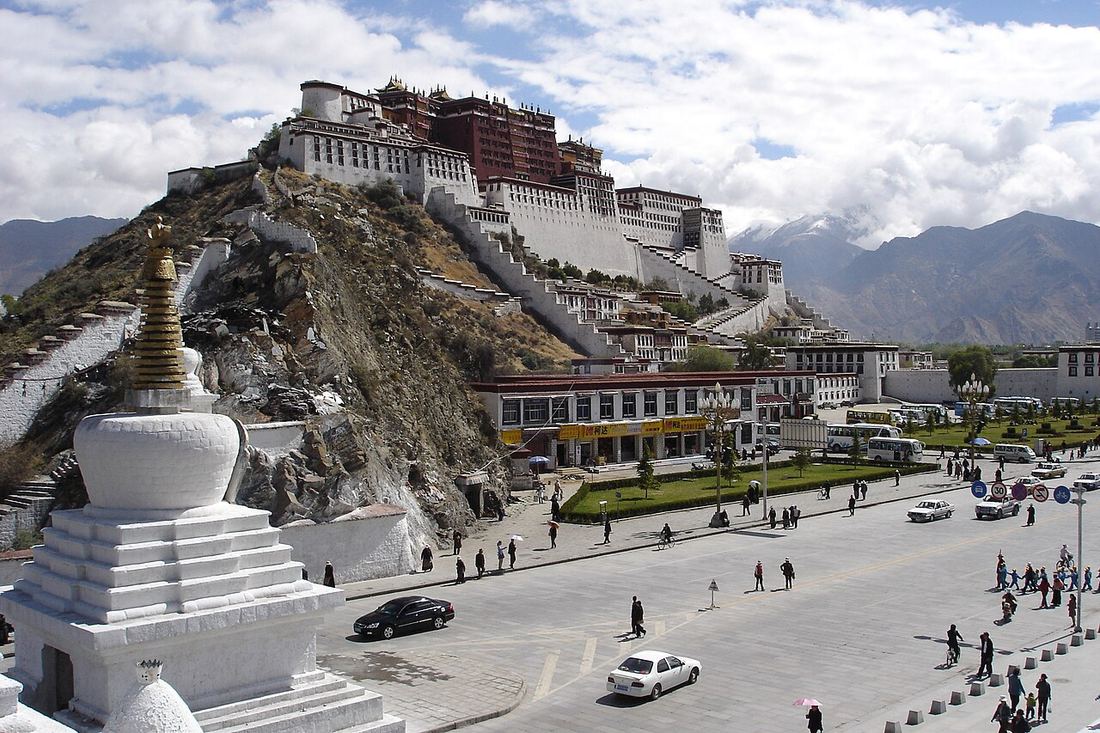
If Tibet is on your itinerary, note that the requirements differ from anywhere else. Taiwan travellers need a Tibet Travel Permit, which cannot be applied for individually. It must be arranged through a travel agency in Tibet, and the traveller must be accompanied by a guide and follow the declared itinerary. Airlines check the permit at check-in, so without it you cannot even board.
Processing typically takes 10 to 15 working days, longer in peak season or around festivals. The documents required include a copy of the permit, confirmed entry and exit dates and cities, and a full day-by-day itinerary. If the plan extends to Everest Base Camp, Ngari or parts of Nyingchi, a separate border-area permit is also required.
It is also worth knowing that Tibet occasionally restricts entry for Taiwan travellers at short notice for policy or weather reasons. That is force majeure, and the responsible approach is to design a fallback rather than discover the problem in Lhasa. Our practice is to raise the risk during planning and, if necessary, offer an alternative route in Qinghai, Gansu or western Sichuan.
How to tell whether a local operator really handles Taiwan guests
A local operator is the company that receives you at the destination. Plenty of companies write that they welcome Taiwan travellers without having much experience of serving them. These questions can be asked directly, and the more specific the answers, the more credible the company.
- Do you have experience hosting Taiwan travellers? When was the most recent group, and on what route?
- How do you verify accommodation eligibility? Can the guesthouses along Qinghai Lake or in Hemu village accept Taiwan guests?
- Does the guide speak Mandarin? Do they adjust vocabulary for Taiwanese usage?
- Do you arrange the Tibet permit, and how many working days does it take?
- If a guest has a health problem such as altitude sickness, how do you handle it, and do you know the local hospitals?
There are no standard answers, but specificity is itself a signal. A company able to say that a particular hotel on Qinghai Lake is licensed to receive Taiwan guests and that they placed three Taiwan parties there last year is far more convincing than one that says everything can be arranged.
Wording and food: two details Taiwan guests notice
Vocabulary differences look minor and accumulate over a long trip. In mainland usage, fan dian means restaurant while jiu dian means hotel, the reverse of Taiwanese habit. Bian dang becomes he fan; jiao ta che becomes zi xing che. A guide unaware of these differences adds a layer of clarification to every conversation.
On food, the northwest and the Tibetan plateau run on mutton, beef and wheat noodles, with heavier and spicier seasoning than many visitors expect. Common requests from Taiwan guests include vegetarian meals, no beef, no lamb, and rice as an option. All of these can be arranged — but they must be raised in advance, because finding an alternative restaurant mid-route in the Gobi or at altitude is not realistic.
It is worth saying plainly: the people who plan your trip cannot fix a dietary requirement on the day it arises. They can only design around it beforehand. This is why we collect dietary and mobility requirements at the confirmation stage rather than on arrival.
Pacing: what Taiwanese travellers tend to want from a China trip
In our experience, travellers from Taiwan often want depth rather than coverage. They are less interested in ticking off a long list and more interested in understanding a place: how people live, what the food is, what the history actually was. That makes a slower itinerary with fewer stops work better than a dense one.
The exception is first-time visitors with a tight window, who reasonably want the headline sights. Even then, we would rather cut a stop than compress the days. A trip that runs at six or seven hours of driving a day is not a trip anyone enjoys, regardless of how good the destinations are.
A practical pattern that works well: one anchor sight per day, a slower morning or afternoon, and at least one full rest day in a journey of eight days or more. It sounds like less, and it consistently produces better feedback than a packed schedule.
Payment, connectivity and what actually works
Taiwan travellers can register the major mainland payment apps with a local mobile number and link a Taiwan-issued bank card, then pay by QR code almost everywhere. Enabling both apps is worthwhile since some merchants accept only one. Carry a small amount of RMB cash for remote areas and small vendors.
Connectivity is the other practical question. Roaming plans and some eSIMs give you access to the services you normally use; a mainland local network may restrict some of them. Confirm what your plan covers before departure and have a fallback. Also save your itinerary and hotel details somewhere readable offline, so you can share them with family without relying on a signal.
Some smaller towns and scenic areas have weak mobile data. That is one reason we provide the itinerary in both print and phone form, with daily contact details. It is a small thing that removes a lot of low-level anxiety.
How much a Taiwan-origin China trip costs
The most common question we get is what an eight-day Qinghai–Gansu loop costs. There is no single answer, because six variables move the number: group size, season, hotel grade, vehicle class, total days and route length, plus special requirements such as timed-entry tickets or a Tibet permit.
Two structural points are worth understanding. First, per-person cost falls as group size rises, because the vehicle and guide are fixed costs. Second, the gap between low and high season can be a factor of two, and moving from a locally rated four-star hotel to an international five-star adds a substantial nightly difference.
Our advice is to give the consultant a budget ceiling rather than asking only for the lowest price. A budget is useful information — it lets them design the most sensible version within it, instead of quoting you a floor price you would not actually want. China Custom Tours quotes all-in and itemised, with exclusions listed, so you can compare it against other offers line by line.
A short list of first-trip suggestions
If there are elderly parents or young children in the group, start somewhere low and comfortable. Chengdu plus Jiuzhaigou is a strong choice: Chengdu is gentle and well-equipped, and Jiuzhaigou sits between about 2,000 and 3,100 metres, far more forgiving than Qinghai or Tibet. The Dujiangyan irrigation works and the panda base appeal to children more than parents expect.
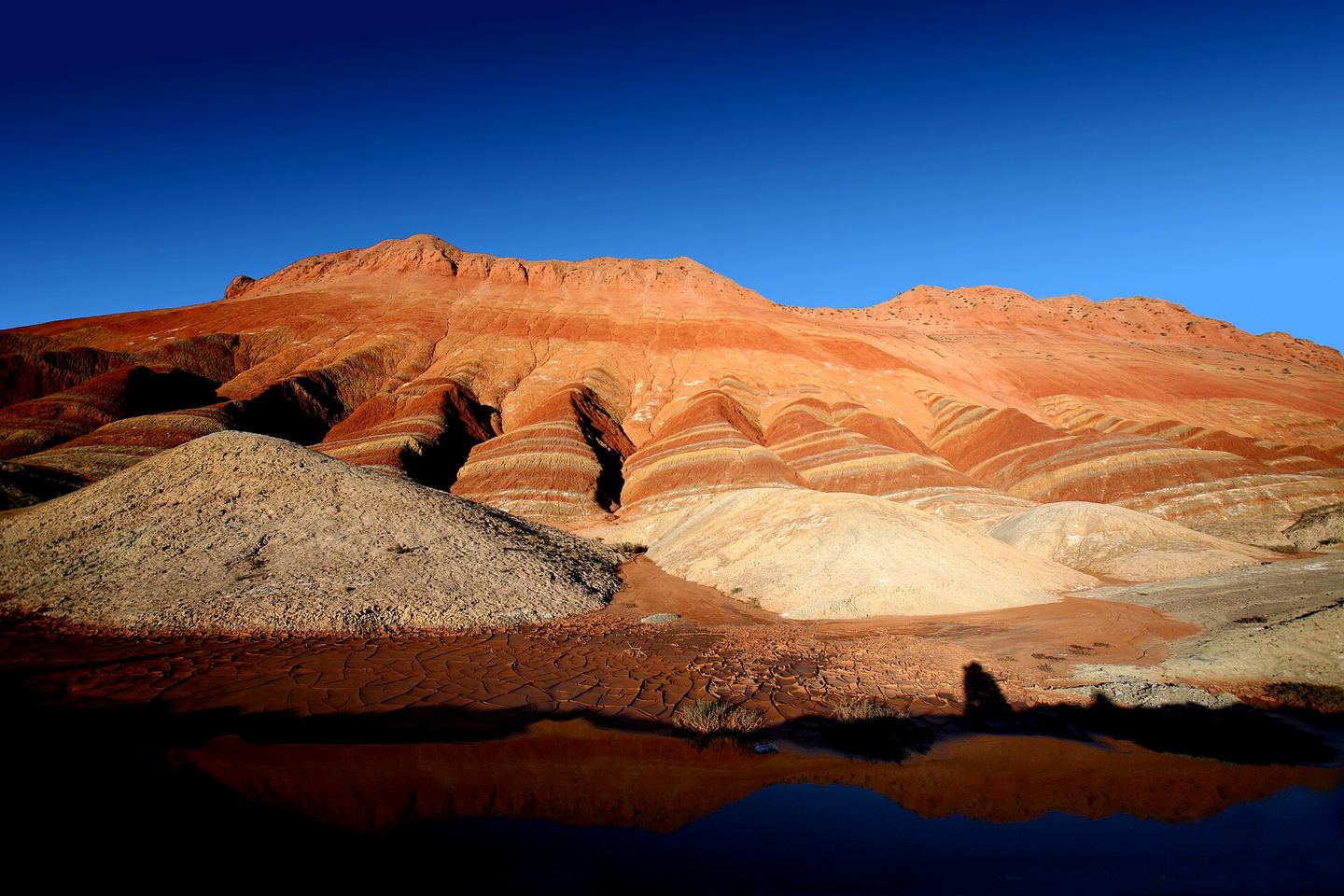
If the group is adults with reasonable fitness and wants to see a side of China that feels genuinely different, the Qinghai–Gansu Grand Loop is the answer. Eight to ten days takes in high-altitude lakes, salt flats, yardang desert, rainbow hills, cave murals and grassland. Its demands are altitude and distance, so pacing matters more than the number of stops.
If time is short — five or six days — Guilin and Yangshuo is the easiest entry. Flights from Taiwan to Guilin, or connections via Guangzhou or Xiamen, are straightforward, the altitude is low, walking is limited, and the Li River and Longji terraces are visually unmistakable.
In closing
Travelling from Taiwan to mainland China is lower-hassle than many people expect: shared language, plentiful flights and an extensive high-speed rail network. The three things that genuinely need attention are permit validity, accommodation eligibility, and permits for special regions such as Tibet.
Handle those and the rest is scenery. If you are planning a trip, send us your dates, group size, the cities you have in mind and anything relevant about your party — mobility, dietary needs, altitude concerns — and we will come back within one working day with a day-by-day itinerary, a clear price, and a pre-departure checklist.