- Start with the geography, because transport is the whole problem
- Option 1: the conventional group tour
- Option 2: a private car with driver
- Option 3: self-driving
- Option 4: public transport
- The four options side by side
- Altitude: the thing to understand before anything else
- Season: what you see depends on the month
- Pacing: how far to drive each day
- Getting Qinghai Lake right
- Chaka Salt Lake: timing and weather decide everything
- In short: settle the transport and half the trip is decided
Start with the geography, because transport is the whole problem
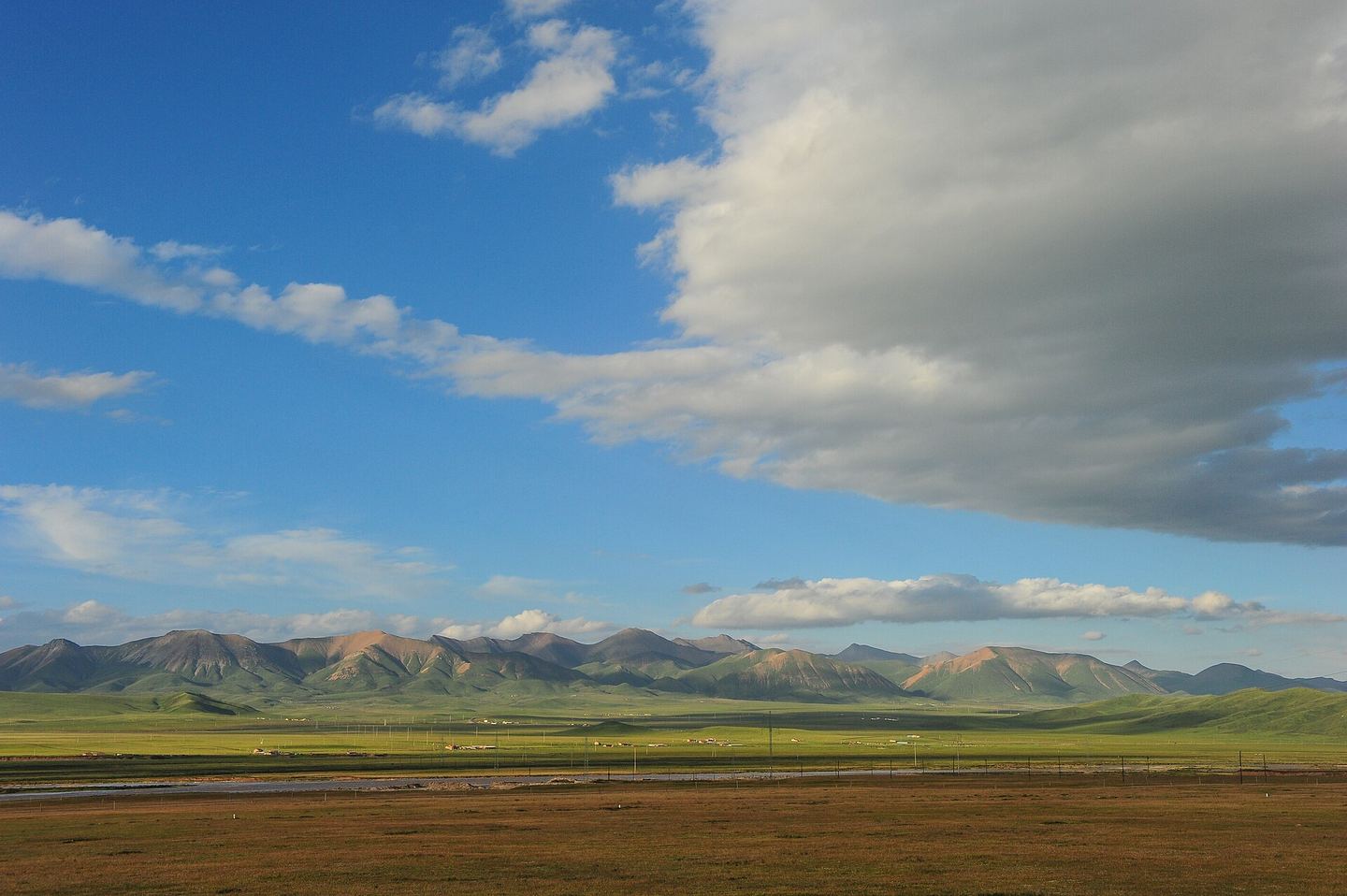
Qinghai is China's fourth-largest province by area and one of the least densely populated. That produces a specific consequence: distances between sights are not city distances of a few kilometres, but tens or hundreds of kilometres, with long stretches of steppe, salt flat and desert in between. Beautiful, and entirely without services.
Take the classic lake circuit. Xining to Qinghai Lake is about 150 km. Qinghai Lake to Chaka around 150 km. Chaka to Dachaidan roughly 250 km. Dachaidan to Dunhuang about 350 km. Add those up and it becomes clear why the choice of transport is nearly the same as the choice of experience.
So this article does not discuss which scenery is prettier. It sets out four ways of moving around — group tour, private car, self-driving and public transport — each with a legitimate use case and a specific downside.
Option 1: the conventional group tour
The advantages are simplicity and a low unit price. Coaches spread the transport cost across many travellers, and the operator handles the itinerary, hotels and tickets. You get on and off. For travellers on a tight budget who are comfortable with a fixed rhythm, this is a legitimate option.
The downsides are equally clear. The schedule is fixed: when you leave and how long you stay at each stop is decided by the itinerary, not by you. At Qinghai Lake, where the same view becomes an entirely different place in different light, compressed stops cost you real experience. There may also be shopping stops, because a low price implies a different revenue model. And you are sharing your holiday with strangers.
One further limitation is easy to miss: coach itineraries use standardised sights, meaning the places a coach can park. The best stretches — the unnamed bends on the western lake road, the pasture tracks on the southern slopes of the Qilian mountains — are not accessible to a coach. That is not unwillingness; it is the vehicle.
Option 2: a private car with driver
A private car is now the mainstream choice and the one I recommend most often. One vehicle serves only your party, the driver drives, and you decide the route and how long to stay. In a place where so much of the scenery is the road itself, that difference is concrete: stop when you want, get out when the light is good, head back early when you are tired.
On cost, the per-person figure is higher than a coach tour but lower than most people expect. The key variables are vehicle class and group size: two to three guests need a sedan or SUV, four to five need a seven-seat MPV, six to nine need a larger van or minibus. A group of four sharing one MPV is usually the best value, because the fixed cost of vehicle and driver is spread across more people.
It is worth distinguishing a car-only arrangement from a car plus guide. Car-only means a driver with no commentary. Car plus guide means the driver and the guide are two separate people, with the guide handling explanation and coordination. In Qinghai a great deal of the value at a site like Kumbum Monastery comes from background: Tibetan Buddhist practice, the meaning of the halls, what the lake represents to Tibetan people. Without a guide you see scenery; with one you see a story.
- Vehicle class and seat count, with one seat guaranteed per passenger (overloading is illegal)
- Whether driver and guide are the same person or two people
- Who pays fuel, tolls, parking, and the driver's meals and accommodation
- Roughly how far you drive each day, and whether any driving happens at night
- Whether the vehicle has an operating licence and insurance
Option 3: self-driving
Self-driving in Qinghai is feasible, and the main roads are in good condition. But there are three real barriers to think through first.
The first is the licence. Hong Kong and Taiwan driving licences are not directly usable in mainland China; a temporary driving permit is required, which takes time and has its own conditions. The second is altitude: around Qinghai Lake you are above 3,000 m, and some people react. Driving while affected is dangerous. The third is distance and fatigue, since the full loop exceeds 2,000 km and consecutive long driving days accumulate.
Self-driving suits a narrow case: high-altitude driving experience, a generous number of days, no time pressure, and only short to medium stretches such as the immediate Qinghai Lake area. Trying to complete the whole Qinghai–Gansu loop this way is not advisable — not for reasons of skill, but of fatigue management.
Option 4: public transport
Public transport in Qinghai means buses from Xining to the prefectures, plus a few scenic shuttle services. It is cheap, and it is sparse and fixed. Services are infrequent, departure times are rigid, and missing one can cost you half a day. Most buses reach the county town rather than the scenic area itself, so the last stretch usually needs another vehicle.
Who is it for? Travellers with plenty of time, willing to stay in county towns, moving slowly and treating the journey itself as the point. If you have eight to ten days and want to cover Qinghai Lake, Chaka, Dunhuang and Zhangye, public transport is essentially unworkable, because waiting and transferring alone will consume two or three days.
There is also a seasonal reality: Qinghai's tourism season concentrates in June to September, and bus capacity does not expand much to match. In peak season, tickets on popular routes need booking in advance. It is not a case of turning up and seeing.
The four options side by side
| Option | Cost per person | Flexibility | Suits | Main drawback |
|---|---|---|---|---|
| Group tour | Lowest | Low | Budget-focused, happy with a fixed rhythm | Fixed schedule, possible shopping stops, strangers |
| Private car | Medium to high | High | Families, friends, older travellers, seeing the road | Higher per person; depends on choosing a good operator |
| Private car plus guide | Highest | High | Travellers who want cultural context | Most expensive; good guides need booking ahead |
| Self-driving | Medium | Highest | Experienced high-altitude drivers with flexible dates | Licence formalities, altitude, long-distance fatigue |
| Public transport | Low | Medium to low | Backpackers with plenty of time | Sparse services, does not reach sights, peak-season scarcity |
Altitude: the thing to understand before anything else
The first physical threshold in Qinghai is altitude. Xining sits at about 2,200 m and most people notice nothing. Qinghai Lake is around 3,196 m, Chaka about 3,100 m, and the Qilian area generally between 2,800 and 3,200 m. That is not high enough to cause serious altitude sickness, but it is high enough that some people get headaches, poor sleep or loss of appetite.
Our approach has three parts. First, no strenuous activity on the day of arrival in Xining, so the body begins to adapt. Second, ascend progressively rather than sleeping at the highest point on the first night. Third, carry oxygen in the vehicle and choose hotels with reliable heating and good ventilation.
Guests with cardiovascular conditions, serious respiratory illness, anaemia or a history of sleep apnoea should consult a doctor before booking. That is not a disclaimer; it is real advice. Qinghai Lake at 3,196 m is genuinely unsuitable for some health profiles, and there are plenty of lower-altitude destinations inside China that are just as rewarding.
Season: what you see depends on the month
Qinghai's tourist season runs from June to September. July is the peak of the rapeseed bloom, when the fields around Qinghai Lake and Menyuan open at the same time — highly distinctive, and also the busiest and most expensive period. August brings the rains, with more frequent afternoon showers, but the most comfortable temperatures.
June and September are the two windows I recommend most. June offers the rapeseed and fresh green before the crowds peak. September brings clear skies, good visibility, golden grassland, and comparatively better odds of securing Mogao Caves tickets. Both have stable weather, fewer people and more sensible prices.
The periods to avoid are late July to late August, and the first week of October. During the national holiday from 1 to 7 October, visitor numbers at Qinghai Lake and Chaka spike and the experience degrades noticeably. From late October temperatures drop; between November and March the lake freezes, which has its own appeal, though temperatures can fall below minus fifteen.
Pacing: how far to drive each day
This is the most commonly overlooked element of a Qinghai itinerary, and it affects the experience more than any individual sight. Plenty of itineraries look rich on paper but involve six or seven hours a day in the vehicle. You come home remembering fatigue.
I would hold the daily average under 300 km and protect at least one unhurried block each day — half an hour sitting by the lake, or an early return to the hotel. The Qinghai–Gansu loop runs over 2,000 km across eight to ten days, which is already more than 200 km a day before any stops.
If you only have five days, the answer is not to compress the loop but to shrink it. Cover Xining, Kumbum Monastery, Qinghai Lake and Chaka, and stay longer in each place. That produces a far better trip than five days spent rushing 2,000 km.
Getting Qinghai Lake right
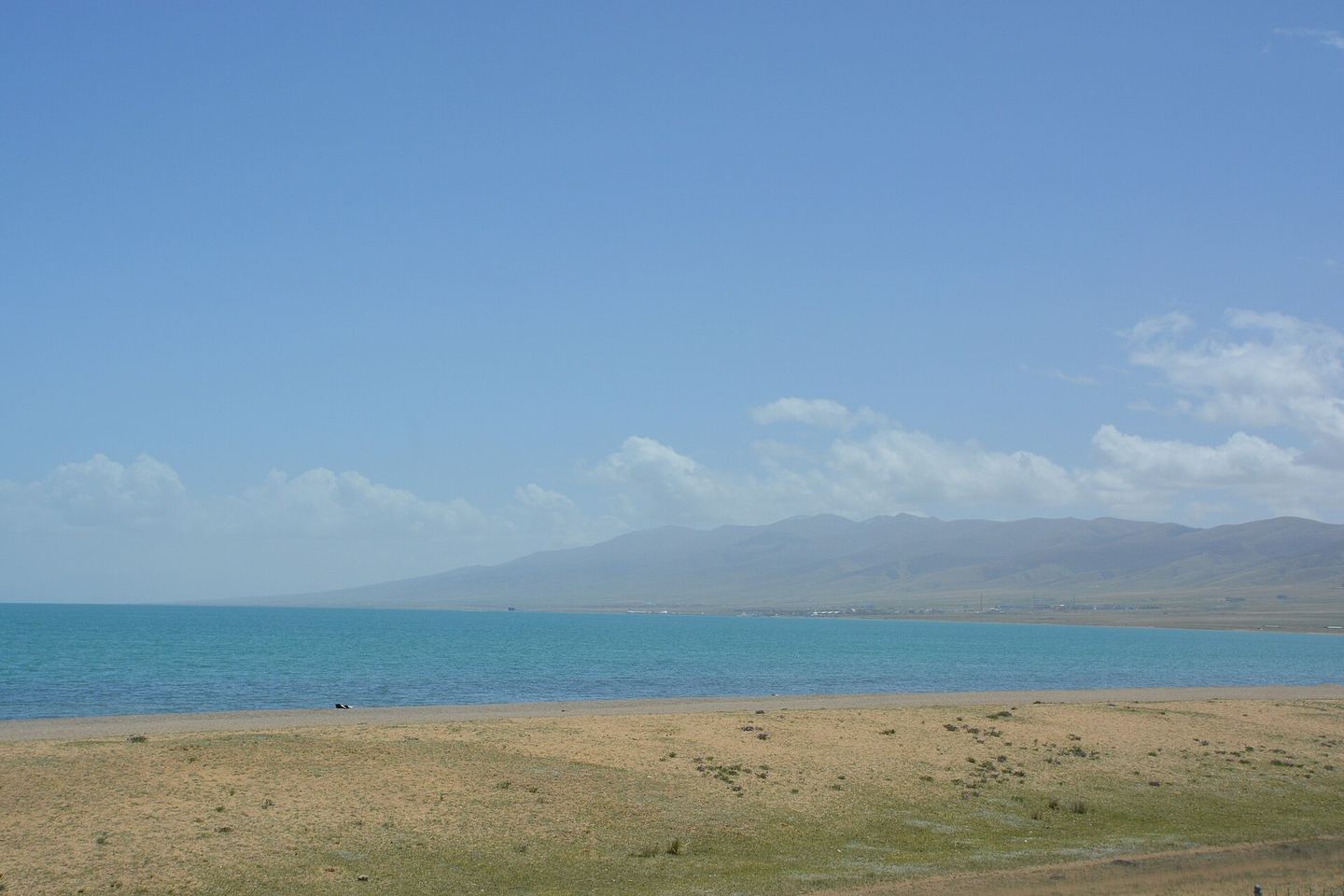
Qinghai Lake is China's largest inland salt lake, with a ring road of about 360 km. Most visitors go to the official Erlangjian scenic area, which is well equipped and heavily commercialised. The more beautiful stretches are often outside the ticketed areas, on the western and eastern ring roads — no admission fee, few people, and a lake that becomes a graded blue when the light is right.
Timing matters. Early morning and late afternoon give the best light; midday flattens the colour. If the itinerary allows, stay a night by the lake rather than returning to Xining the same day. That is what lets you see a sunrise or sunset, which is the part of Qinghai Lake that is genuinely worth the journey.
One practical note: the lake shore sits at about 3,196 m and is cold morning and evening. Even in July, night temperatures can drop to between five and ten degrees. A windproof outer layer is a requirement, not an option.
Chaka Salt Lake: timing and weather decide everything
Chaka is known as the mirror of the sky, but that effect does not happen on demand. It needs three conditions at once: a shallow film of water on the surface, little wind, and a suitable sun angle. Early morning and late afternoon are best. Midday light is too hard and the reflection weakens; on rainy days there is no mirror effect at all.
Crowds are the other factor. At midday in peak season Chaka is very busy, and the photograph of one person alone on a mirror surface is realistically only possible at opening or close to closing. That is why we usually schedule Chaka for early morning or evening rather than the middle of the day.
Two small practicalities: the salt crust reflects strongly, so sunglasses are functional rather than decorative, and salt water is corrosive to footwear. Wear water-resistant, easy-to-clean shoes, or hire protective overshoes on site.
In short: settle the transport and half the trip is decided
Information about Qinghai is not hard to find. What is genuinely difficult is settling the two variables that determine everything else — how you move, and at what pace. Those decide what you see and what mood you see it in.
China Custom Tours runs tailor-made small-group journeys in Qinghai and Gansu: no strangers in your vehicle, a private car throughout, driver and guide as separate people, no shopping stops, and pickup on arrival in Xining. We build the daily driving distance and stop time first, then choose the sights. If you are planning Qinghai, send us your dates, group size and number of days and we will produce a day-by-day itinerary with distances and altitudes marked.