- First, the shape: a corridor 1,600 km long
- Shape one: the Hexi Corridor (linear, 6–8 days)
- Shape two: the Qinghai–Gansu Grand Loop (circular, 8–10 days)
- The two shapes compared
- Dunhuang: the centre of gravity, and the site to book first
- Zhangye Danxia: the hour you go changes the colour
- Jiayuguan and Wuwei: often skipped, worth keeping
- The best season for Gansu
- Transport: why Gansu is largely a private car trip
- A suggested eight-day shape for the grand loop
- In closing: choose the shape first, then the details
First, the shape: a corridor 1,600 km long
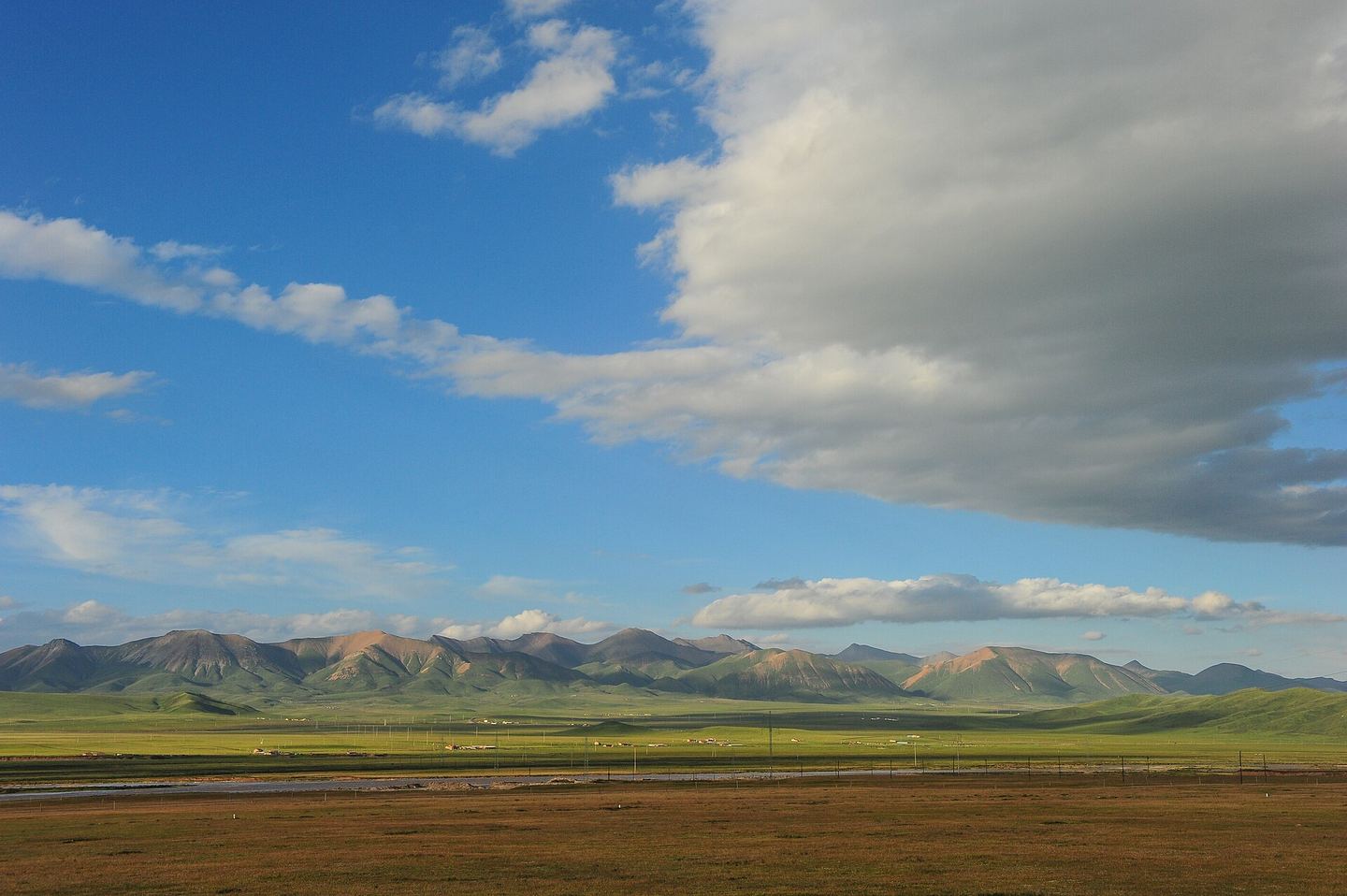
Gansu's geography is unusual. It stretches roughly 1,600 km from east to west and is narrow north to south, like a corridor laid at an angle. To the north lie the Badain Jaran and Tengger deserts; to the south, the snow line of the Qilian mountains. Between them runs a narrow string of oases.
That strip is the historic core of the Silk Road and the spine of Gansu travel today. Understand it and several things fall into place: why Gansu sights are distributed along a line rather than clustered; why a private car or self-drive is nearly the only way to travel deeply; and why Dunhuang, though remote, remains unmissable.
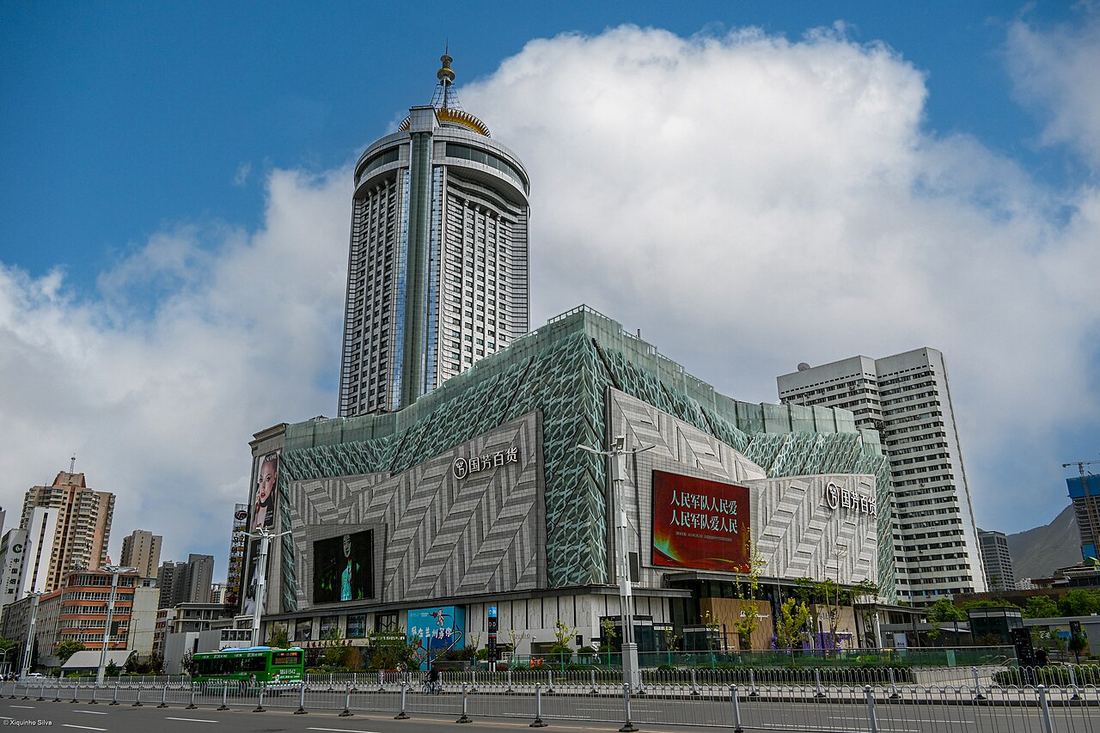
The main nodes from east to west are Lanzhou, Wuwei, Zhangye, Jiuquan, Jiayuguan, Guazhou and Dunhuang. Travelling that line east to west is the Hexi Corridor route. Linking it back through Qinghai in a circle produces the Qinghai–Gansu Grand Loop. Those two shapes are the central choice in Gansu planning.
Shape one: the Hexi Corridor (linear, 6–8 days)
The corridor route starts in Lanzhou and heads west to Dunhuang, then either flies out or returns the same way. Its logic is one line to the end, with no backtracking and relatively simple logistics.
Who is it for? First, travellers with limited time who want Gansu thoroughly rather than broadly. Second, those specifically interested in history and cave art, since the Mogao Caves, Yulin Caves, Mati Temple, Leitai Han Tomb and Jiayuguan form a continuous historical thread. Third, anyone who would rather not manage a complex circular itinerary.
Its weakness is a narrower range of scenery. The corridor delivers desert, oasis, danxia landform, cave art and frontier fortifications against the Qilian snow line. It is genuinely dramatic, but it lacks the high-altitude lakes and salt flats that Qinghai adds. If you are chasing maximum landscape variety, the corridor alone may leave you slightly unsatisfied.
Shape two: the Qinghai–Gansu Grand Loop (circular, 8–10 days)
The grand loop connects Qinghai and Gansu into a circle — in via Xining and out via Xining, or in via Xining and out via Dunhuang — covering Qinghai Lake, Chaka Salt Lake, Dachaidan Emerald Lake, Dunhuang, Jiayuguan, Zhangye Danxia and the Qilian grasslands, clockwise or anticlockwise.
Its strength is landscape density. In eight to ten days you see an alpine lake, salt flats, an emerald lake, yardang desert, rainbow hills, cave murals and grassland. That range is hard to match anywhere else in China in a single route.
Its cost is distance. The loop exceeds 2,000 km, averaging over 200 km a day before any stops, which makes the itinerary dense. The real challenge is therefore not fitness but pacing — how far each day, where you sleep, which sights you are willing to skip. Those decisions determine whether you remember the scenery or the tiredness.
The two shapes compared
| Hexi Corridor | Qinghai–Gansu Grand Loop | |
|---|---|---|
| Days | 6–8 | 8–10 |
| Start / end | Lanzhou in, Dunhuang out (linear) | Xining in and out, or Xining in, Dunhuang out |
| Total distance | About 1,100 km | Over 2,000 km |
| Landscape types | Desert, oasis, danxia, cave art, frontier fort | Lake, salt flat, yardang, danxia, cave art, grassland |
| Altitude | 1,100–1,500 m, easy | Up to 3,196 m at Qinghai Lake |
| Good for | Limited time, strong interest in history and caves | Landscape variety, more generous days |
| Main challenge | Narrower landscape range | Long drives, altitude, pacing |
Dunhuang: the centre of gravity, and the site to book first
Dunhuang anchors the entire Gansu itinerary for one reason: the Mogao Caves. A UNESCO World Heritage site, its murals and painted sculpture are acutely sensitive to carbon dioxide and humidity, so daily admissions are strictly capped and tickets are issued in timed, real-name slots.
The practical consequence is that tickets vanish. In July, August and the October holiday, normal tickets routinely sell out a month ahead. If you cannot secure one, the alternatives are the emergency ticket, which opens fewer caves, or shifting your Dunhuang dates. Booking Mogao is therefore the first action in planning a Gansu trip, not the last.
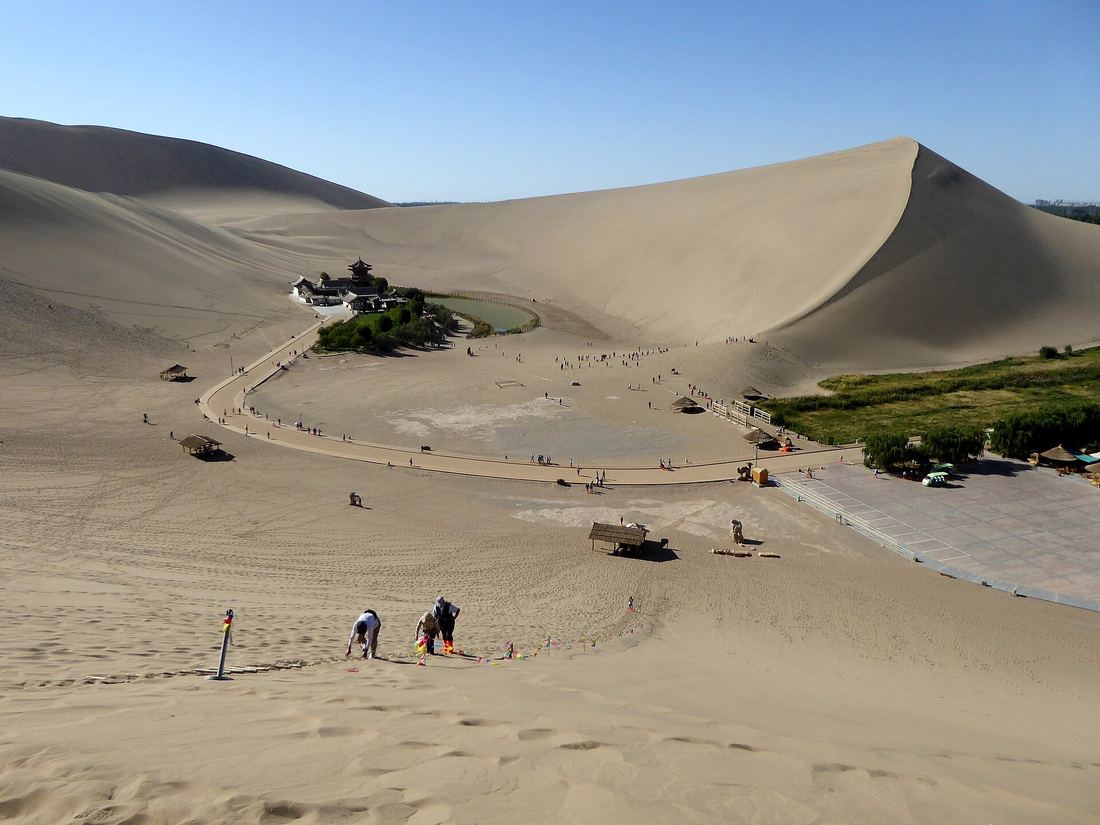
Dunhuang deserves three days: arrival and the Shazhou night market on day one; Mogao in the morning of day two when light and crowds are better; the western line to Yumen Pass and the yardang formations, or Crescent Lake, on day three. Two days is possible but forces a choice between Mogao and Crescent Lake.
- Mogao Caves are real-name and timed-entry; bring the passport or permit used for the booking
- No photography, video or flash inside the caves; bags must be left in storage
- Dunhuang sits at about 1,138 m with no altitude issue, but summer daytime temperatures can exceed 35°C, so carry water and a hat
Zhangye Danxia: the hour you go changes the colour
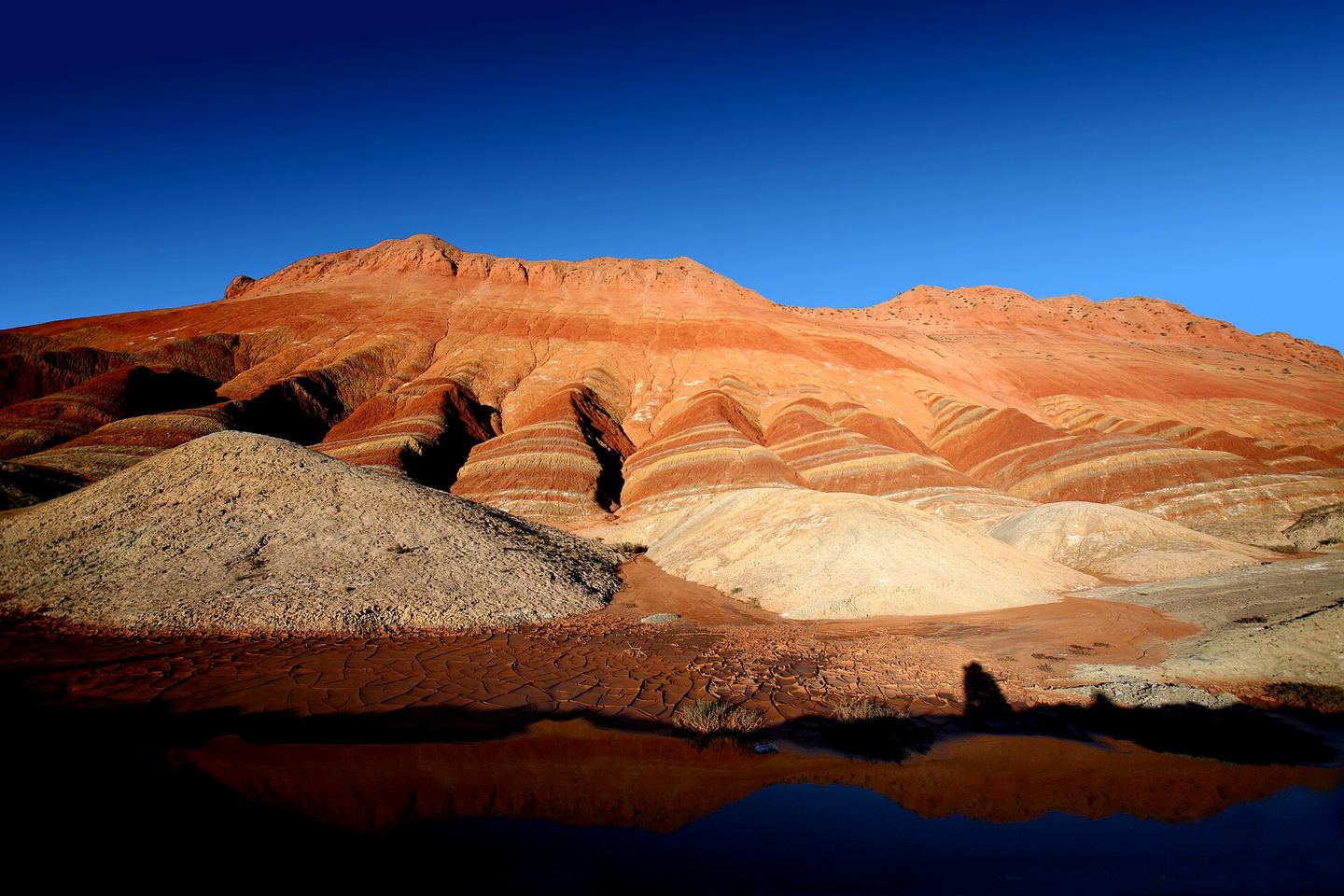
Zhangye Danxia is one of Gansu's most photogenic sites, and its appearance depends heavily on light. Midday sun flattens the ridges and washes the colour out; late afternoon rakes across the strata and separates red, yellow and orange into distinct bands. When you visit therefore shapes what you actually see.
We normally schedule the afternoon, with enough time to move between the main viewing platforms. Shuttle buses connect the platforms, but there is still walking and queueing. In peak season the late-afternoon crowd concentrates, so entering a little earlier makes the visit considerably more comfortable.
One easily missed addition: beyond Danxia, Zhangye has Mati Temple and the Great Buddha Temple. If time allows, Mati Temple — cave shrines set against a snow-mountain backdrop — is unusual enough to justify half a day.
Jiayuguan and Wuwei: often skipped, worth keeping
Jiayuguan is the westernmost pass of the Ming Great Wall, and the fortification is unusually intact. Its value is spatial: standing on the ramparts you see the fort on one side and open desert on the other, which conveys the idea of the wall ending in a way photographs do not. Most itineraries allow half a day to a full day here.
Wuwei, historically Liangzhou, is frequently passed over, yet it is where the bronze galloping horse — the model for China's tourism emblem — was excavated from the Leitai Han Tomb. Travellers interested in history will find half a day worthwhile, and the Confucian temple is among the largest in the northwest.
With eight days you usually have to choose between an extra day in Dunhuang and adding Wuwei. My advice is to prioritise Dunhuang. The Mogao Caves cannot be substituted, whereas Wuwei can wait for a future trip.
The best season for Gansu
The main window is May to October. May and June bring comfortable temperatures and fewer visitors. July and August are hottest, with daytime temperatures of 30 to 35 degrees, and represent the summer peak when Mogao tickets are tightest. September and October offer clear skies and excellent light for photography, though the first week of October brings a sharp rise in visitor numbers.
Do not underestimate the day-night temperature swing. Gansu is dry, and the gap between daytime and night frequently exceeds 15 degrees. Even in summer, mornings and evenings may call for a jacket. This is most pronounced along the corridor.
Winter, from November to March, remains visitable. Mogao stays open, crowds are minimal, but temperatures can drop to minus fifteen and some road sections carry snow risk. It suits photographers who want empty sites and do not mind the cold.
Transport: why Gansu is largely a private car trip
Gansu's sights lie along one corridor, 100 to 300 km apart. Public transport — buses and trains — works between the main cities: Lanzhou to Zhangye and Zhangye to Jiayuguan both have high-speed services. The problem is the last stretch, since the station is often tens of kilometres from the actual site and onward services are sparse.
In practice the efficient pattern is rail between cities and a car for the local sightseeing. Take the train from Lanzhou to Zhangye, then hire a car for Danxia and Mati Temple; continue by rail to Jiayuguan. That balances time and cost reasonably well.
If you are doing the Qinghai–Gansu Grand Loop, however, a car is essentially mandatory. Large stretches — the western lake road, the Qilian grasslands, the Dachaidan area — are not realistically covered by public transport. This is also why vehicle and driver dominate the cost of a grand loop quotation.
A suggested eight-day shape for the grand loop
A common and sensible eight-day sequence: arrive in Xining and visit Kumbum Monastery; Qinghai Lake and the western ring road, sleeping by the lake or at Chaka; Chaka Salt Lake and Dachaidan Emerald Lake; transfer to Dunhuang; Mogao Caves and Crescent Lake; the Dunhuang western line or eastward to Jiayuguan; Jiayuguan and Zhangye Danxia; Qilian grasslands back to Xining.
A ten-day version adds a day each in the Qinghai Lake area, Dunhuang and Zhangye, and can include the Menyuan rapeseed fields in July or Guide Danxia. The extra two days improve the experience noticeably — not because of two additional sights, but because every day relaxes slightly.
In either case, check the daily distance as a hard constraint. A day over 450 km combined with three sights is essentially a day spent watching scenery through a window, with very short actual stops.
In closing: choose the shape first, then the details
The right planning order for Gansu is: decide between the Hexi Corridor and the grand loop, then decide how many days, and only then choose which sights to include. Working in the opposite order — picking sights first and building a route around them — usually produces an itinerary with unreasonable driving and rushed days.
China Custom Tours publishes day-by-day itineraries for its Gansu and Qinghai routes with daily distance, altitude and accommodation marked. Our standard arrangement is driver and guide as separate people, no shopping stops, no strangers sharing your vehicle, and timed-entry sites such as Mogao Caves secured in advance. Tell us your dates, group size and number of days and we will produce a comparable itinerary and quotation.