- The honest starting point: the gap is rarely profit
- Item 1: the vehicle, and what 'seats' really means
- Item 2: is the driver also the guide?
- Item 3: hotels, and the phrase 'or similar'
- Item 4: tickets, especially where entry is capped
- Item 5: itinerary density, or how many stops per day
- Item 6: shopping commission — the most expensive kind of cheap
- Item 7: the costs that never appear on a quote
- A practical tool: ten questions for any quote
- A worked comparison
- Paying for uncertainty is worth something
The honest starting point: the gap is rarely profit
When travellers receive two quotes that far apart, the instinct is to assume the expensive one is padding. But put the two documents side by side and break them down, and the difference almost always maps onto specific items: vehicle class, whether driver and guide are two people or one, hotel grade and location, whether timed-entry tickets are guaranteed, whether shopping commission is built into the business model, itinerary density, daily distance, and night driving.
Fill in those specs item by item and the prices converge quickly. In other words, threefold differences are seldom the same product at three prices. They are three different products wearing the same itinerary name.
The aim of this article is narrow and practical: to teach you which lines to read when a quote lands in your inbox.
Item 1: the vehicle, and what 'seats' really means
This is the most commonly overlooked line and one of the largest cost drivers. Tourist vehicles inside China run from sedans through SUVs to seven-seat MPVs (a Buick GL8 class is typical), larger vans and minibuses. On the same route, a sedan versus an MPV can move the price by 30 to 50 percent.
More important is whether the vehicle is one seat per passenger. A compliant tourist vehicle must give every passenger a seat; overloading is illegal. Some operators cut corners by putting six people into a five-seat car or stacking luggage on passengers' laps. That 'saving' is paid for in comfort and in safety.
There is a further hidden cost: dead mileage. The Qinghai–Gansu Grand Loop runs well over 2,000 km, and if the driver has to return empty to the starting city at the end, that is real money. A proper quote includes it; a squeezed quote usually leaves it out and adds it on the ground.
Item 2: is the driver also the guide?
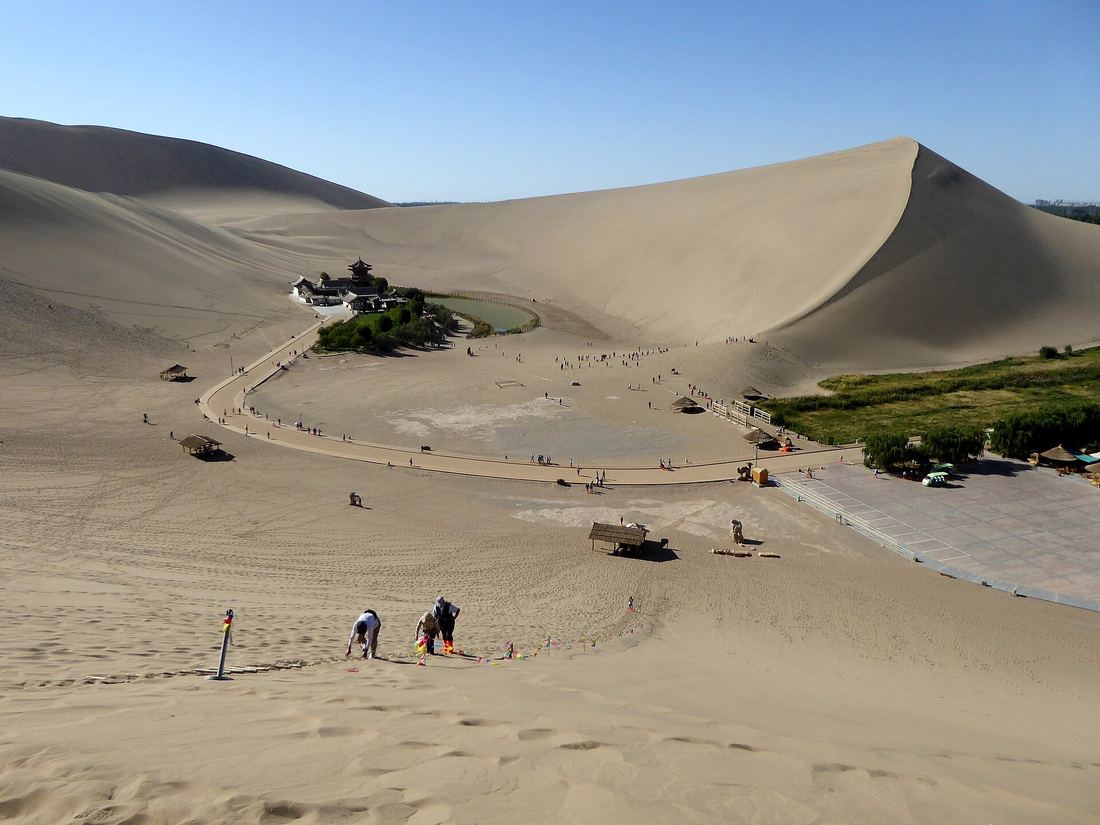
Inside China, 'driver who also guides' and 'driver plus guide' are two genuinely different services, separated by both price and experience. Long drives are tiring on their own. Asking one person to drive and narrate affects safety first, and the quality of explanation second. Somebody who has driven all day does not give a good account of Dunhuang's history that evening.
The test is a single question: are the driver and guide the same person? If the answer is 'our driver doubles as guide throughout', you at least know the arrangement is cost-led. Our standard is that they are two separate people, that the guide is licensed, and that Hong Kong guests get a Cantonese-speaking guide and Taiwan guests a Mandarin-speaking one.
Ask too about the guide's pay structure. If a guide's income depends on shopping commission, their behaviour on the road follows from that, regardless of what the itinerary says.
Item 3: hotels, and the phrase 'or similar'
When a quote says 'or similar hotels', it usually means you will not know where you are staying until close to departure — sometimes until you arrive. The phrase exists to preserve flexibility for the operator, and it transfers that uncertainty to you.
Hotel pricing varies by star rating, brand, location and room type. Two properties both labelled four-star can differ by a factor of two between the city centre and the outskirts. And in Qinghai and Gansu there is an extra dimension people forget: heating and oxygen. At altitude, whether a hotel has oxygen equipment and adequate heating directly determines how well you sleep.
| What the quote says | What it often means | What to push for |
|---|---|---|
| 'Or similar hotels' | Not yet confirmed, or deliberately flexible | Which ones can you book now? Put the names in the quote |
| 'Local four-star' | Possibly a locally rated property | The name — then check reviews and location yourself |
| 'Characteristic guesthouse' | A phrase with almost no information in it | Name, room type, private bathroom, heating |
| 'Central hotel' | Undefined 'central'' | Actual driving time to the main sights |
Item 4: tickets, especially where entry is capped
Admission tickets look like the most transparent line on a quote. They are not. Several major sites enforce strict real-name, timed-entry quotas; the Mogao Caves near Dunhuang are the classic case. Normal tickets sell out, sometimes a month ahead in peak season. If you cannot get a normal ticket you may be offered the emergency ticket (fewer caves accessible) or a date change.
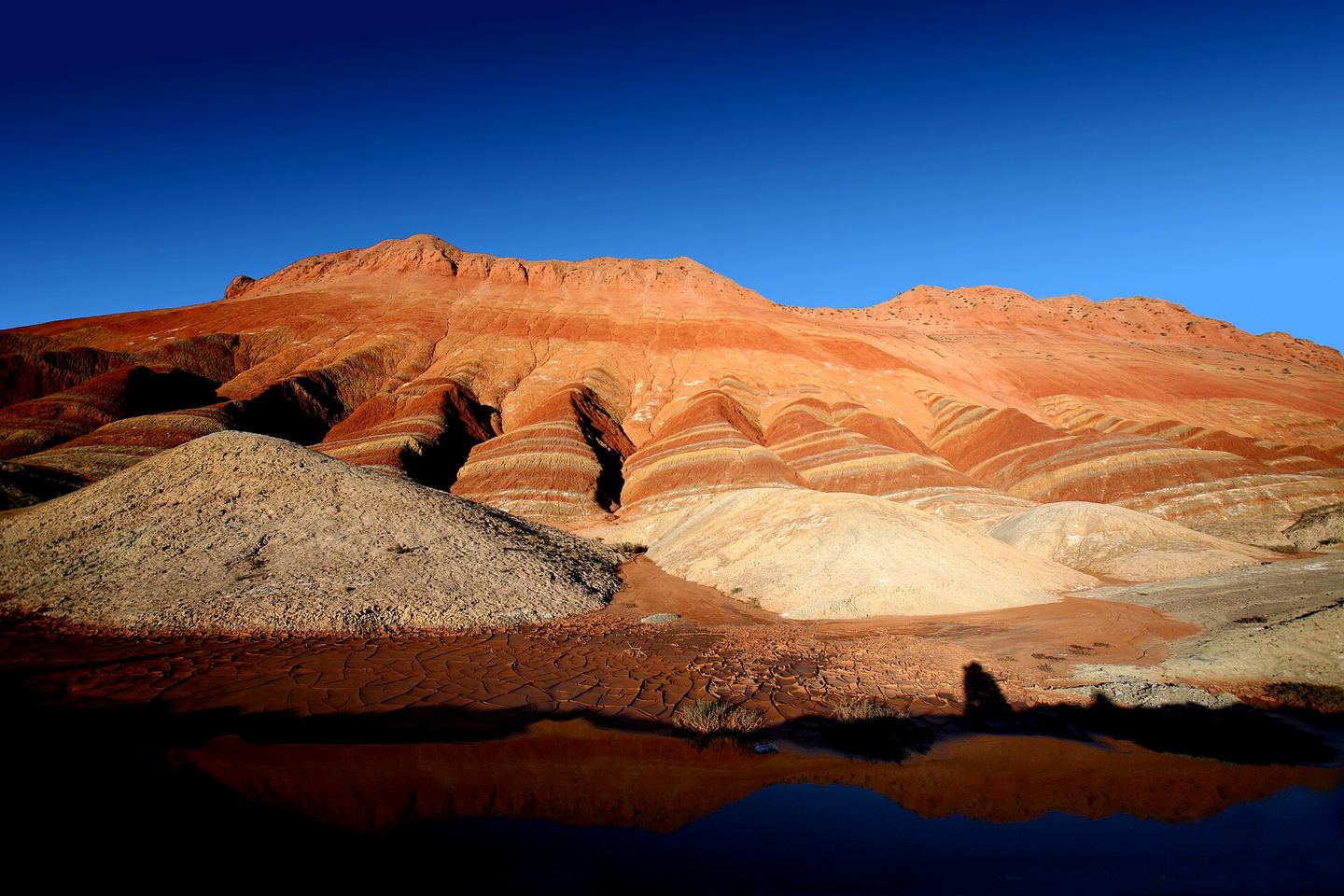
So on Mogao Caves, a cheaper quote may mean 'we will try on the day', while a higher one includes the cost and effort of securing normal tickets in advance. Beyond that, shuttle buses, cable cars, sightseeing vehicles and guide fees differ between operators. On the Qinghai–Gansu route, Qinghai Lake, Chaka Salt Lake, Zhangye Danxia and Jiayuguan all carry internal transport fees of one kind or another.
Item 5: itinerary density, or how many stops per day
Eight days containing ten sights and eight days containing twenty are entirely different products. More stops means longer daily drives, longer driver hours, more peripheral accommodation and simpler meals. It looks like better value — 'same eight days, more places' — but what you actually buy is six or seven hours a day in a vehicle.
A useful method: add up each day's approximate driving distance and stop time. If a day covers 500 km and four sights, it is a photo-stop itinerary. On the Qinghai–Gansu loop we typically hold the daily average under 300 km and protect at least one unhurried slot each day — half an hour by the lake, or an early return to the hotel.
Item 6: shopping commission — the most expensive kind of cheap
This is the single most important line, and it usually is not on the page at all. Cheap group tours are cheap because the revenue model differs: the tour fee is a floor, and the profit comes from shopping commissions and optional extras. The structural consequence is that the guide must take you shopping, or their own income suffers.
So do not only ask 'is shopping included?'. Ask where the guide's income comes from. If it depends on commission, then even with no shop named in the itinerary, various 'visits', 'experiences' and 'characteristic product centres' will appear in practice.
- Get 'no forced shopping, no optional extras' written into the contract, not just the brochure
- Require every daily stop to be listed in the itinerary, including anything described as a 'visit'
- Ask whether the guide is a full-time employee or paid per tour — that determines their incentives
- When comparing, do not compare totals; rebuild all three quotes into one spec table first
Item 7: the costs that never appear on a quote
The last category is hardest to compare because it is not written down anywhere. It is organisational capability: whether anyone can make a decision on the spot when plans change, whether there is a fallback when high-season hotels sell out, who handles it when a guest falls ill, and who re-plans the rest of the trip when a flight is delayed. That capacity is built from people and time, and it costs money.
There is an indirect way to assess it. Is the company's content specific? Does it state daily distances, altitudes and best months? Does it publish its registered company name and licence number? Does it say who handles your trip? The more concrete a company's public information, the more likely its operations are organised in the same way.
Our own position: no shopping stops, no strangers sharing your vehicle, private vehicle throughout, driver and guide as separate people, itemised pricing, and one consultant on WhatsApp from enquiry to the end of the trip with 7×24 emergency support. China Custom Tours is operated by Qinghai Youxuan Culture & Tourism Co., Ltd. (licence L-QH-100310), and all of that is verifiable.
A practical tool: ten questions for any quote
- What vehicle class does this price cover — how many seats, one seat per person?
- Are the driver and guide one person or two? Is the guide licensed, and in what language?
- Which hotels? Can the names go into the quote?
- Are timed-entry sites such as Mogao Caves guaranteed a normal ticket, and what if not?
- Roughly how far do we drive each day, and how many stops are scheduled?
- Which tickets, shuttle buses, cable cars and guide fees are included, and which are not?
- Who pays fuel, tolls, parking, and the driver's and guide's meals and lodging?
- What is the guide's pay structure? Is there any shopping arrangement?
- What is the payment schedule, and what are the cancellation terms?
- If something goes wrong on the road, who do I contact, and how fast will they reply?
Ten answers to those questions will tell you more about a company than any website copy. The second and sixth are the ones operators most often answer vaguely, and vagueness itself is information.
A worked comparison
Take the same eight-day Qinghai–Gansu loop, quoted at X by company A and 2.5X by company B. Ask the ten questions and a familiar pattern usually emerges. Company A quotes a five-seat car shared by four, driver doubling as guide, 'or similar' hotels, no guaranteed Mogao Caves ticket, and two shopping stops. Company B quotes a seven-seat MPV, driver and guide separate, hotel names specified, Mogao normal tickets secured in advance, and no shopping.
In that case a 2.5x difference is coherent — you are not buying the same thing. The situations to be wary of are different: identical specs quoted at double the price, or an identical price delivering a completely different spec. Both are detectable with the question list above.
Paying for uncertainty is worth something
Travel inside China carries more variables than most destinations: weather, timed-entry quotas, road conditions, flight delays. A cheap quote implicitly assumes everything goes smoothly. A tailor-made quote carries, inside its price, an amount that pays for 'and if it does not go smoothly, someone can fix it'. That amount is invisible on the page and most felt on the road.
So the advice is not 'choose the expensive one'. It is 'establish the spec, then compare'. Once three quotes have been rebuilt into one spec table, the decision becomes obvious — and much faster.