- First, what underrated actually means
- One: Dachaidan Emerald Lake (Qinghai)
- Two: Yulin Caves (Gansu)
- Three: Mati Temple (Zhangye, Gansu)
- Four: Guide Danxia and the clear Yellow River (Qinghai)
- Five: Menyuan rapeseed fields (Qinghai)
- Six: Zhuor'er Mountain (Qilian, Qinghai)
- Seven: Furong Town (Hunan)
- Eight: Longji terraces, Jinkeng (Guangxi)
- Nine: Xidi (Anhui)
- Ten: Kashgar old town (Xinjiang)
- Choosing between them
- Why underrated places suit tailor-made trips
- A warning: underrated places have costs too
- How to fit these into an itinerary
- In closing: going underrated is a choice, not a status symbol
First, what underrated actually means
When people hear underrated destination they often picture somewhere remote, difficult and basic. That is not what the term means. It is relative: it refers to relatively low visitor numbers, not to poor access or weak infrastructure. Some of these places are two or three hours from a major city and simply sit outside the standard group-tour route.
The practical benefit is direct. In these places the same budget buys a better experience: hotels are not stretched, there are no queues, nobody steps in front of your photograph and restaurants do not need bookings. The drawback is thinner information, which means somebody needs to stitch the transport and accommodation together for you.
The ten places below share one trait: their scenery or cultural value exceeds their current profile. Most require a private car to reach, which is why underrated destinations suit tailor-made trips better than group tours.
One: Dachaidan Emerald Lake (Qinghai)
Near Dachaidan on the Qinghai–Gansu loop lies a group of salt lakes coloured green and lake-blue by mineral deposits. Compared with Chaka, visitor numbers are far lower while the colour is more intense, particularly in good light, when the whole surface looks like stained glass.
The catch is that it depends on weather — without sun the colour flattens noticeably. Build in flexibility and aim for a bright afternoon or early evening. There are no proper facilities, so bring water and sun protection.
Logistically it sits between Qinghai Lake and Dunhuang and is a standard waypoint on the grand loop. It requires no detour at all, which is what makes it so practical: half a day is enough.
Two: Yulin Caves (Gansu)
Yulin Caves near Guazhou in Gansu is the sister site to the Mogao Caves, with mural art of comparable quality and far fewer visitors. If you cannot secure normal Mogao tickets, Yulin is an excellent substitute — and some travellers find the experience better, because there are fewer people and the guide has more time.
It requires advance booking too, and the number of caves open varies. Confirm before travelling. It lies about two hours from Dunhuang and is usually combined with Suoyang City and the Eastern Thousand Buddha Caves as a full day.
If you have three days in Dunhuang, allocating one to the Yulin line makes the whole visit richer than concentrating everything on Mogao and Crescent Lake.
Three: Mati Temple (Zhangye, Gansu)
Mati Temple sits in Sunan county near Zhangye and is known for the combination of cave shrines against a snow-mountain backdrop. Compared with the crowds at Zhangye Danxia, it receives far fewer visitors, and it delivers religious culture, cave art and Qilian mountain scenery in one place.
The most distinctive element is the Thirty-Three Heavens caves, cut into a cliff face in stacked tiers. Reaching them involves a steep flight of steps and some fitness. For anyone interested in cave art and monasteries, it justifies half a day more than Danxia does.
It is about 65 km from Zhangye city and requires a car. It is usually paired with Danxia on the same day or across adjacent days, which keeps the extra driving modest.
Four: Guide Danxia and the clear Yellow River (Qinghai)
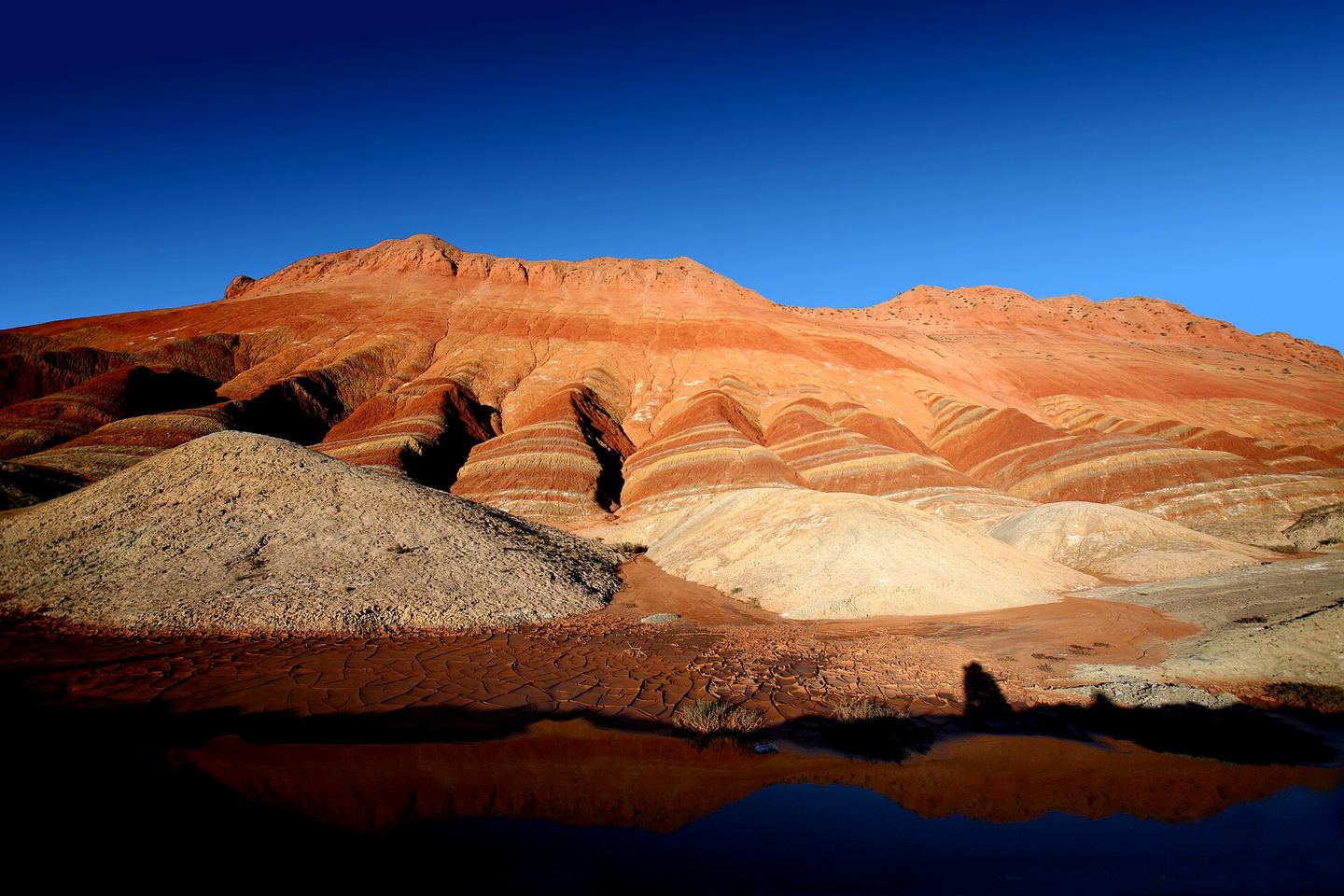
Guide lies about 100 km south of Xining and is known for the fact that here the Yellow River runs clear — hence the local saying about the Yellow River turning clear at Guide. Combined with the surrounding danxia landform at Ashigong National Geopark, it produces an unusual pairing: red rock and clear water in one frame.
Visitor numbers are far below Qinghai Lake or Chaka, which makes it an excellent day trip from Xining when there is spare time. It is also worth noting that Guide sits at about 2,200 m, comparable to Xining, which makes it very comfortable for anyone sensitive to altitude.
That last point makes Guide a genuinely useful option for travellers who want the Qinghai experience without going high. It is one of the few places in the region that delivers the landscape at low elevation.
Five: Menyuan rapeseed fields (Qinghai)
Menyuan sits on the southern slopes of the Qilian mountains, and in July the rapeseed fields spread along the valley in what is known as the hundred-li rapeseed sea. Compared with the fields beside Qinghai Lake, Menyuan's are larger and more layered, with snow mountains and grassland behind them.
It is intensely seasonal, with a flowering window of about twenty days, usually in early to mid-July. Miss it and you wait a year. That timing is also part of why it remains underrated: fewer people know the window.
Menyuan sits near the return leg of the grand loop between Zhangye and Xining, so it can be included without detouring. For July departures we normally build it in, because at that moment it is among the best scenery on the entire route.
Six: Zhuor'er Mountain (Qilian, Qinghai)
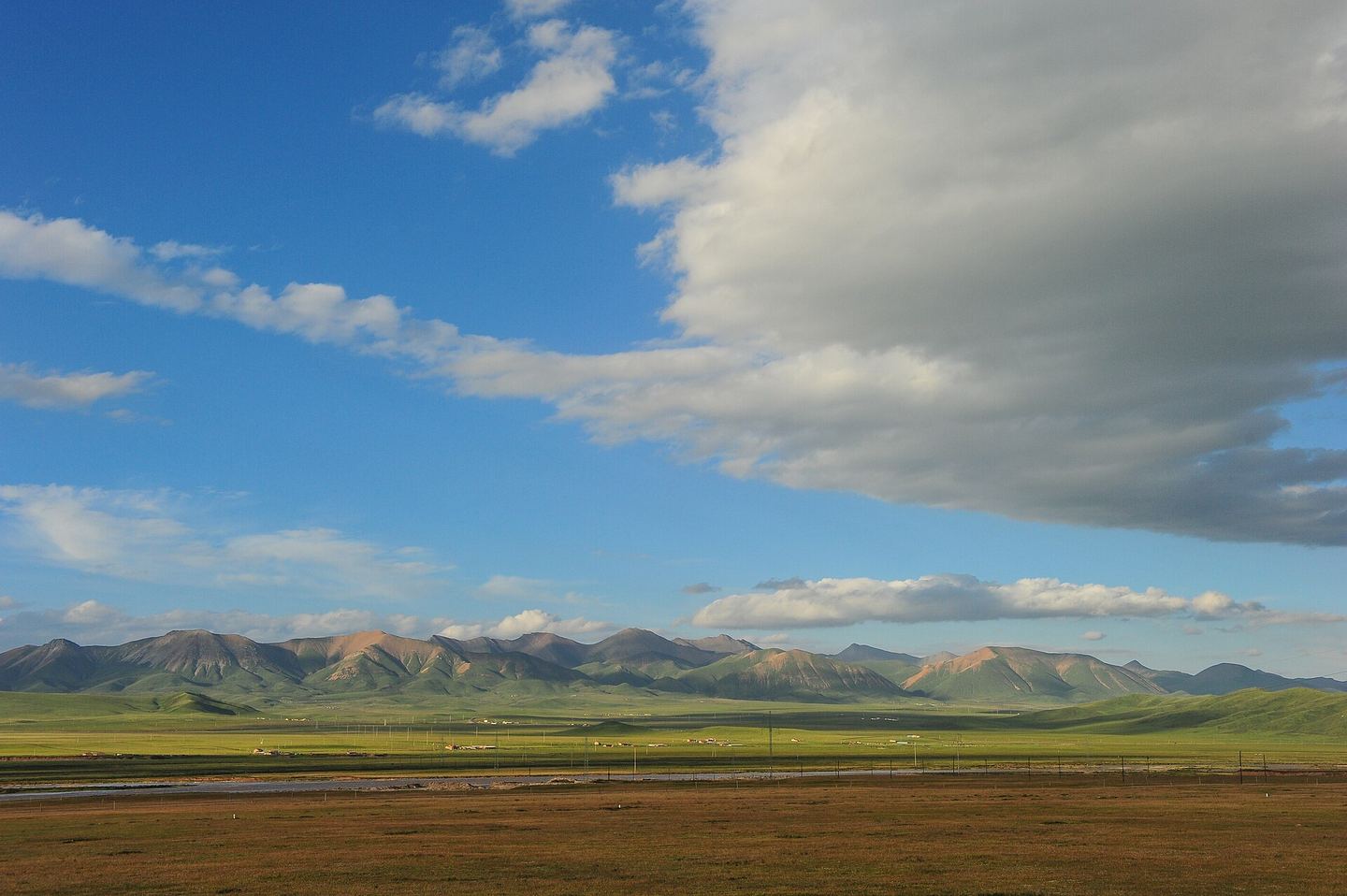
Zhuor'er Mountain near Qilian county offers one of the best vantage points over the Qilian grasslands and the distant snow line. At about 3,000 m, the summit opens onto grassland, terraced fields, villages and mountains layered one behind the other.
It receives fewer visitors than other viewpoints largely because Qilian county itself is not a standard stop — many groups drive straight from Zhangye back to Xining and skip it. In practice, the Qilian stretch has the most continuous scenery on the entire Qinghai–Gansu loop.
The best time is late afternoon, when the light rakes across the grassland. Staying one night in Qilian county and heading toward Xining the following morning works well.
Seven: Furong Town (Hunan)
Furong Town in western Hunan is a thousand-year-old settlement built across a waterfall, with Tujia stilt houses on both banks and the sound of water constant. It is considerably less visited than Fenghuang and, partly as a result, less commercialised.
It is usually combined with Zhangjiajie and Fenghuang into one route, and sits conveniently on the drive from Zhangjiajie to Fenghuang. Half a day is enough. Anyone travelling through western Hunan will find it a worthwhile addition.
Two notes: the town involves a good deal of walking and steps, which is not friendly to limited mobility, and the waterfall volume varies seasonally, being most dramatic after the rains.
Eight: Longji terraces, Jinkeng (Guangxi)
The Longji rice terraces have two main areas. Ping'an is the earlier-developed and more visited; Jinkeng is larger, with wider views and fewer visitors. The two signature moments are the flooded terraces in May, when the surface mirrors the sky, and the golden rice in September.
It is a natural extension of a Guilin and Yangshuo itinerary, about two hours from Guilin. Many travellers see only the Li River and skip Longji, yet the two offer entirely different categories of landscape: one water, one fields.
Staying a night is worthwhile. The morning mist and sunrise over the terraces cannot be experienced on a day trip. Accommodation is guesthouse-based and simpler than a city hotel, so expect variations in sound insulation and hot-water reliability.
Nine: Xidi (Anhui)
Xidi shares UNESCO World Heritage status with Hongcun but receives noticeably fewer visitors. Both are masterpieces of Huizhou architecture — white walls, dark tiles, horse-head gables, and intricately carved wood, stone and brick. Hongcun's water system photographs better; Xidi is quieter and lets you look at the buildings properly.
For travellers interested in architecture and culture, Xidi often provides the better visit precisely because there are fewer tour groups and you can walk the lanes slowly. Tickets include a guide, and listening for a while changes your understanding entirely.
Xidi and Hongcun are about twenty minutes apart and normally visited on the same day. Add Huangshan and you have a complete Huizhou itinerary.
Ten: Kashgar old town (Xinjiang)
Kashgar is the most important city in southern Xinjiang, and its old town — the streets, the earth-coloured buildings, the craft workshops and the markets — has an atmosphere unlike any other city in China. It is among the country's most distinctive historic quarters, and visitor numbers remain modest because of the distance.
Kashgar's value is not in specific sights but in atmosphere. Walking the lanes past children playing football, coppersmiths at work and naan ovens smoking is a kind of daily life that other old towns have largely lost. Allow two days: one for the old town at an unhurried pace, one for the tomb and the surrounding markets.
Kashgar is also the gateway to the Pamir plateau and Tashkurgan. With ten days or more and an interest in both culture and high-altitude landscape, southern Xinjiang justifies a dedicated trip.
Choosing between them
| Destination | Region | Best season | Access | Suits |
|---|---|---|---|---|
| Dachaidan Emerald Lake | Qinghai | June–September | Easy, on the loop | Wanting salt lakes without crowds |
| Yulin Caves | Gansu | May–October | Moderate, booking needed, longer drive | Interest in cave art |
| Mati Temple | Gansu | May–October | Moderate, needs a car | Wanting caves and snow mountains together |
| Guide Danxia | Qinghai | May–October | Easy, near Xining | Wanting Qinghai without altitude |
| Menyuan rapeseed | Qinghai | Early to mid-July | Easy, on the loop | Photographers chasing the bloom |
| Zhuor'er Mountain | Qinghai | June–September | Moderate, needs a car | Lovers of continuous landscape |
| Furong Town | Hunan | April–October | Easy, en route | An addition to Zhangjiajie and Fenghuang |
| Longji Jinkeng | Guangxi | May, September | Moderate, mountain roads | Wanting more than the Li River |
| Xidi | Anhui | April–May, September–November | Easy, with Hongcun | Interest in architecture and culture |
| Kashgar old town | Xinjiang | May–October | Hard, long distance | Generous time; culture-focused |
Why underrated places suit tailor-made trips
The reason is simple: public transport does not reach them. Group tours follow standardised routes aimed at places a coach can reach, park at and be received at. Underrated destinations generally need a private car and guide to be arranged flexibly.
Information is the second reason. Details matter enormously and are hard to find online: what hour the light is best, which entrance is quieter, where you can eat nearby, whether peak-season accommodation needs booking months ahead. These are the things that decide the experience.
This is how we build underrated routes: not by adding sights, but by finding places on an existing loop that are quiet and on the way. On the Qinghai–Gansu Grand Loop, Dachaidan, Guide and Menyuan all require no detour — many itineraries simply do not mention them.
A warning: underrated places have costs too
It is worth being honest about the trade-offs. Facilities are weaker: fewer dining options, basic restrooms, little shade. Information is less certain: seasonal phenomena such as rapeseed or salt-lake colour depend on weather and may not be at their best when you arrive.
Travel times can also exceed expectations, since map distances and real driving times diverge sharply, especially in mountains. And accommodation choice is limited, so in peak season there may be only a handful of options, at prices that are not cheap.
So the right attitude is to accept the imperfections in exchange for the quiet and the distinctiveness. If comfort and certainty matter most to you, scheduling the famous sights outside peak periods will serve you better than going off the beaten track.
How to fit these into an itinerary
The most useful rule is not to detour. Fix the main route — the Qinghai–Gansu loop, the Zhangjiajie and Fenghuang line, the Guilin and Yangshuo line — then look at which underrated places sit nearby. That adds experience density without adding driving.
The second rule is to keep flexibility. Seasonal sights depend on weather, so treat them as bonuses rather than the core of the itinerary. If conditions are good, spend longer; if not, reorder.
China Custom Tours covers Qinghai, Gansu, Tibet, Xinjiang, Sichuan, Hunan and Guangxi, and builds these quieter places into existing loops. Our standard arrangement is a private vehicle with no strangers, driver and guide as separate people and no shopping stops, which is exactly what allows you to stop in places with no public transport. Tell us which of these appeal and we will see whether they fit your route.
In closing: going underrated is a choice, not a status symbol
One last thought: visiting quieter places does not make you a better traveller than visiting the famous ones. Qinghai Lake, Mogao Caves and the Forbidden City are famous because they deserve to be. Underrated and famous are not a hierarchy; they are a trade — less infrastructure and more uncertainty, in exchange for fewer people and fresher experience.
The best approach is usually a mix: schedule the core famous sights for early morning or late afternoon to avoid the crowds, and use quieter places in between as contrast. The result is a trip with both the things you had to see and the things nobody told you about.
If you are planning a China trip and want to avoid the crowds, send us your dates, group size and the regions you are considering. We will come back within one working day with a day-by-day itinerary marking which stops are quiet options on the way, so you can decide how many to add.