- Start with the principle: pacing before sights
- Destinations that suit older travellers
- Hotels: a lift is the first priority
- Medication and medical preparation
- Altitude: the constraint that requires honesty
- Walking distances: how to estimate and control them
- Food: adjusting to taste and dietary needs
- Insurance: do not choose on price alone
- Communication and expectation management
- Why a private car matters even more with parents
- In closing: what success looks like
Start with the principle: pacing before sights
I have hosted many family groups and seen many itineraries fail. Almost none failed because of the destination. They failed on rhythm: three or four sights a day, out of the hotel at seven, back at nine at night. Younger travellers cope. Older parents do not, and by day three somebody is asleep in the vehicle.
So the first principle of travelling with elderly parents is to put rhythm ahead of sights. Better to skip one place than turn the trip into a test of stamina. It sounds obvious, and it is precisely what most families get wrong, because the instinct is to see as much as possible while you are there.
A workable rhythm is: out in the morning, back to the hotel to rest in the afternoon, out again in the evening. One or two main sights a day, plus at least one completely relaxed day in the itinerary. It looks like less. It consistently produces a better trip.
Destinations that suit older travellers
Three criteria decide whether a destination works: how much walking is involved, the altitude, and how good the supporting infrastructure is. Of those, altitude is the hardest constraint, because unlike the others it cannot be designed around.
| Suitability | Destination | Why |
|---|---|---|
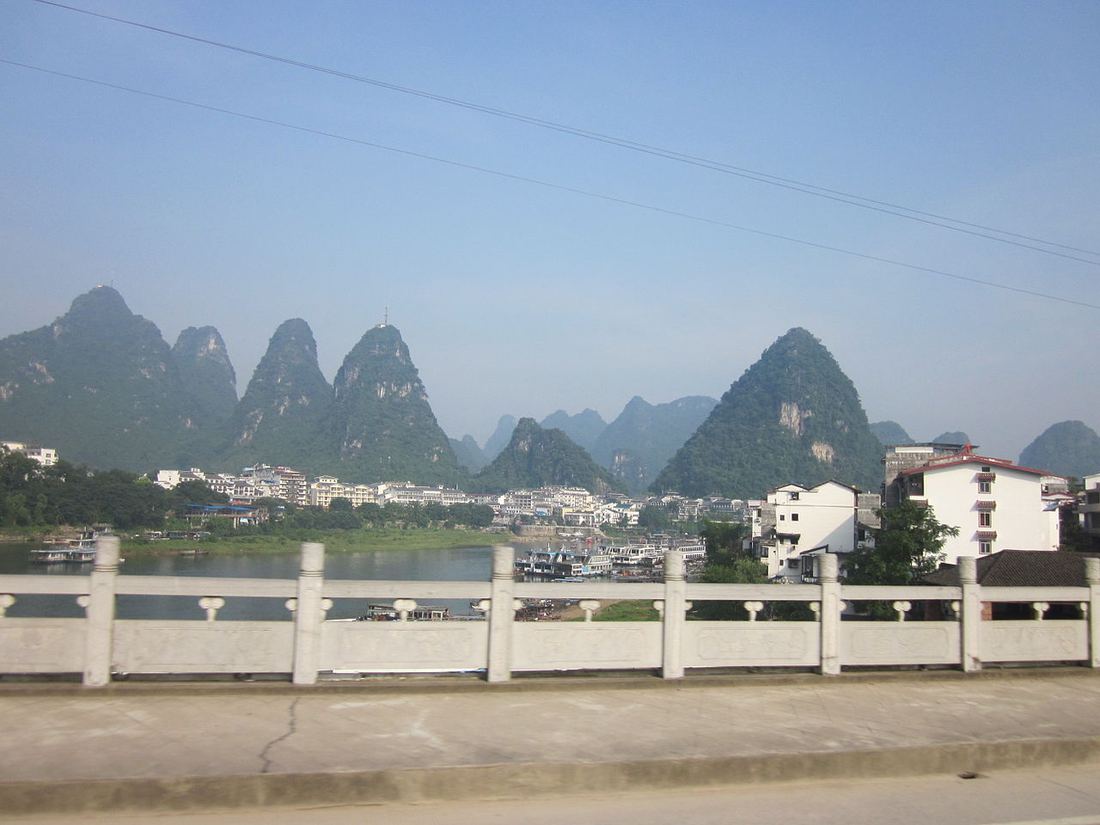
| Very suitable | Guilin and Yangshuo | Low altitude, around 150 m; boats and vehicles rather than walking |
| Very suitable | Shanghai and Jiangnan | Cities and water towns, linked by high-speed rail, ample hotel choice, controllable walking |
| Very suitable | Beijing | Sights are clustered, driving times are short, wheelchairs can be hired, medical facilities are strong |
| Very suitable | Chengdu and Jiuzhaigou | Chengdu is well equipped; Jiuzhaigou sits at 2,000–3,100 m, comparatively gentle |
| Plan carefully | Qinghai and Gansu | 2,200–3,200 m; requires progressive ascent and longer itineraries |
| Not advisable | Tibet | Above 3,650 m, with limited medical and evacuation resources |
Qinghai deserves a specific note. Many parents want to see Qinghai Lake and Dunhuang, and it can be arranged — provided the itinerary is longer, the daily sight count lower, hotels chosen for lifts, and a doctor consulted beforehand. Qinghai Lake sits at about 3,196 m, which is a genuine threshold for anyone with cardiovascular or blood-pressure conditions.
Hotels: a lift is the first priority
This is easily overlooked and it is the most common practical failure. Many guesthouses in historic districts of Chinese towns, and converted old courtyard houses, are beautiful — and have no lift, with narrow, steep stairs. Younger travellers find it charming. Older parents climbing three flights several times a day do not.
So the recommendation is: choose a hotel with a lift, even if it sits slightly away from the historic centre. Other details worth confirming are non-slip flooring or mats in the bathroom, rooms on the same or adjacent floors so you can look after each other easily, and a lift that reaches the restaurant and lobby directly.
In Qinghai and Gansu there are two additional questions: heating and oxygen. Mornings and evenings at altitude are cold, and whether a hotel heats reliably and can supply oxygen directly affects how well everyone sleeps. These should be settled at the booking stage rather than on arrival.
- Is there a lift? This is the single most important item
- Is there non-slip flooring in the bathroom, or can a mat be provided?
- Can rooms be arranged on the same or adjacent floors?
- Can the hotel receive Hong Kong, Macao or Taiwan guests?
- At altitude, is there reliable heating and oxygen equipment?
Medication and medical preparation
Chronic medication should cover the full trip plus one week's buffer, and should travel in hand luggage, never in checked baggage. This matters especially on international flights: if a bag is delayed or lost, an interruption to medication becomes a serious problem rather than an inconvenience.
It is worth preparing a medication list with drug names, doses and purposes in both Chinese and English, so it can be presented to a doctor if needed. Where there is a cardiac history, ask your doctor for a brief written summary — it saves a great deal of time in a consultation.
When planning, we confirm the location of major hospitals along the route and write emergency contact details into the itinerary. This is not pessimism; it means that if something happens, the guide can act immediately rather than searching on a phone in an unfamiliar city.
Altitude: the constraint that requires honesty
Altitude is the one variable that cannot be engineered away. Xining is about 2,200 m, Qinghai Lake about 3,196 m, Chaka about 3,100 m, Lhasa about 3,650 m. For younger travellers these figures mean little more than being slightly out of breath. For older parents with cardiovascular or blood-pressure conditions, they can represent real risk.
So my advice is direct: if there are cardiac, blood-pressure, serious respiratory or sleep-apnoea concerns, consult a doctor before booking. If the doctor advises against it, switch to a low-altitude destination such as Guilin, Shanghai or Beijing. These are equally rewarding, and often better suited, because there is no physical burden attached.
If the doctor is comfortable, three rules apply in execution: no activity on the first day at altitude, progressive ascent rather than jumping to the highest point, and oxygen carried in the vehicle. Our standard is a completely free first day, with the next two spent at lower altitude where medical facilities are best, before moving higher.
Walking distances: how to estimate and control them
Chinese scenic areas are often larger than they appear. The Forbidden City is about three kilometres from the Meridian Gate to the Gate of Divine Prowess. A circuit of Kunming Lake in the Summer Palace exceeds eight kilometres. These numbers do not show on a map, but they are a real load on an older traveller's energy.
There are three ways to control walking. First, use the transport available inside scenic areas: wheelchairs can be hired at the Forbidden City and the Summer Palace, there are boats at the Summer Palace, shuttle buses at Jiuzhaigou and cable cars at Huangshan. Second, choose the right gates, entering and exiting at the closest points so you are not retracing steps. Third, schedule sitting breaks rather than walking continuously for two hours.
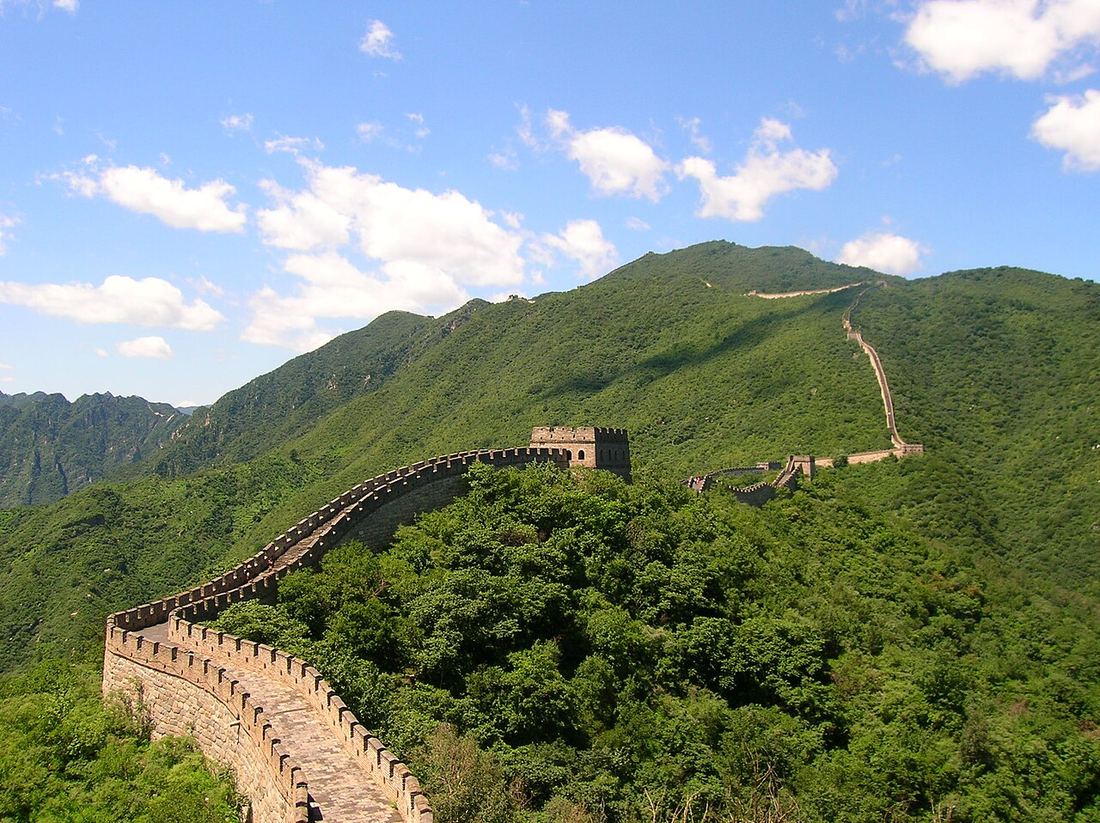
The Great Wall deserves special mention here. Mutianyu has a cable car and toboggan, which substantially reduces climbing; Badaling involves steeper sections. For older travellers we generally recommend Mutianyu for its lower crowds, cable car access and better-preserved walls.
Food: adjusting to taste and dietary needs
Chinese regional food varies enormously. Qinghai and Gansu lean towards halal and northwestern cooking, heavy on lamb and beef with robust seasoning. Sichuan is spicy; Jiangnan is sweet. For an older traveller, several consecutive days of unfamiliar food noticeably affects mood and energy.
Our approach is to arrange food that suits in the cities — lighter Cantonese dishes, congee and noodles, or a hotel buffet — and to prioritise simple, hygienic filling meals on scenic or remote days. Small decisions, but across a ten-day trip one inedible meal shapes an entire day.
Tell the consultant in advance about hypertension requiring low-sodium food, diabetes requiring controlled sugar, or chewing difficulties requiring soft food. All of these can be arranged if raised beforehand, and are very difficult to arrange on the spot.
Insurance: do not choose on price alone
Travel insurance matters considerably more when travelling with older parents. Three clauses are worth checking: whether acute episodes of pre-existing conditions are covered, whether emergency medical transport and hospitalisation are included, and whether the claims process is practicable.
A specific warning: many standard travel policies exclude pre-existing conditions. If your parents have chronic conditions, look for a policy with a more generous approach to pre-existing conditions, or confirm the wording explicitly. The difference matters enormously at the moment you need it.
We raise this when confirming the itinerary and suggest storing the policy number and emergency contact details on your phone, plus a printed copy for your parents to carry. Older travellers tend to trust paper more than a screen.
Communication and expectation management
Before departure, explain roughly how much walking each day involves, whether there are stairs, whether altitude is a factor and what the food is like. Knowing in advance reduces anxiety at the moment.
More important is making it clear that the itinerary can change. This relaxes older travellers considerably — they know they can say they are tired, and that they can skip something. In practice most will not ask. But knowing they can is itself reassuring.
One small practical habit helps: when you get back to the hotel, do not immediately discuss tomorrow's plans. Let your parents rest, shower and drink something warm first. Fatigue amplifies emotion, and pacing prevents most of it.
Why a private car matters even more with parents
With older travellers, the value of a private car is higher than in a standard trip. The reason is direct: a dedicated vehicle means you can rest whenever needed, change the plan whenever needed, avoid waiting at the roadside, avoid crowded metro carriages and avoid hauling luggage between connections. Those avoided stresses accumulate into whether your parents want to go out again the next day.
A guide adds value in the same way. A patient guide will watch older guests getting in and out of the vehicle, help with bags, find rest points inside a scenic area and talk to restaurants about food preferences. None of that is a standard service line, but good guides do it. It is worth asking who your guide will be.
Family groups are the single largest category we host at China Custom Tours. Our approach is a private vehicle with no strangers, an itinerary that can expand or contract day by day, hotels upgraded to properties with lifts, and a guide who looks after older guests getting in and out of the car and at meals — with Cantonese for Hong Kong guests and Mandarin for Taiwan guests.
In closing: what success looks like
With elderly parents, the measure of a good trip is not how many places you visited. It is whether, afterwards, they tell their friends what a good time they had. That standard pushes you towards trade-offs — one sight fewer, half a day more rest, a hotel with a lift instead of charm. All of them are worth making.
Conversely, a trip that leaves your parents too tired to want to travel again is a failure, however many places it covered. Which is why I say to guests: when you take your parents away, what you are buying is not sights. It is time together. Tell us the ages and health situation of your party, especially anything cardiovascular, and your dates, and we will produce a day-by-day itinerary with walking distances, altitudes and hotel details marked.