- Two airports, a long way apart
- Why a Beijing pickup is worth arranging in advance
- How long the transfer takes by district
- Three ways into the city
- Planning car use within Beijing
- A Great Wall day: three planning points
- Season and clothing in Beijing
- Payment, connectivity and practical preparation
- Luggage and vehicle class: the overlooked cost
- Building Beijing into a wider itinerary
- In closing: get the first hour right
Two airports, a long way apart
Beijing Capital International Airport (PEK) sits in Shunyi district to the northeast of the city and is Beijing's longest-serving international gateway. Beijing Daxing International Airport (PKX) opened in 2019 in Daxing district at the southern edge of the city.
The two are over 60 km apart in a straight line, and further by road, in opposite directions. This matters because many travellers book a flight to Beijing without noticing which airport, and end up landing at Daxing with a hotel in the northeast third ring. The first day becomes a road trip. Confirming hotel location against airport is therefore the first task in planning a Beijing trip.
In broad terms the split is that Capital handles more long-haul international and traditional services, while Daxing carries a large share of domestic flights and some international routes. Which airline flies where changes over time, so check the airline's information when booking.
| Capital International (PEK) | Daxing International (PKX) | |
|---|---|---|
| Location | Shunyi district, northeast | Daxing district, southern edge |
| To Tiananmen | About 50–70 minutes off-peak | About 50–70 minutes off-peak |
| To Wangfujing / Dongdan | About 45–65 minutes | About 55–80 minutes |
| To Chaoyang (Guomao area) | About 40–60 minutes | About 60–85 minutes |
| To Zhongguancun (northwest) | About 55–75 minutes | About 70–95 minutes |
| Rail link | Airport Express, plus metro lines | Daxing Airport Express, intercity rail |
| Main traffic | Long-haul international, traditional routes | Domestic flights, some international |
Why a Beijing pickup is worth arranging in advance
Beijing is one of the most complex transport cities in China, with a dense road network and pronounced rush-hour congestion. In a city like this, the cost of uncertainty on arrival is higher than in a smaller city: you might queue forty minutes for a taxi, then sit in traffic for an hour.
The value of a pre-booked pickup is precisely that it removes that uncertainty. The driver waits in the arrivals hall with a name board, the vehicle class is matched to your luggage in advance, and the price is settled before you fly. You are not hunting for an exit in an unfamiliar terminal, comparing prices or explaining your destination.
There is also a practical point about scale. Both Beijing airports are large, and the walking distances between terminals, arrival halls and transport hubs are considerable. Hauling luggage through that is more tiring than people expect. Being met directly simplifies it substantially.
- Flight number and landing time, so the driver can track actual arrival
- Which airport and which terminal (Capital T1/T2/T3, Daxing terminal)
- Number and size of bags, since this determines the vehicle class
- Hotel name plus the street address; hotel names are sometimes duplicated
- A mobile number or WhatsApp the driver can reach you on
How long the transfer takes by district
Time estimates depend on two variables: distance and traffic. Beijing's peaks are pronounced, with weekday congestion between roughly 7:30 and 9:30 in the morning and 17:00 to 19:30 in the evening, when both the airport expressway and the urban ring roads slow noticeably. Budget non-peak time plus 30 to 40 minutes.
The other variable is the exact destination. Beijing is a ring-and-radial city, so two places both described as central can differ by 20 minutes or more from the same airport. When choosing a hotel, check its position relative to your arrival airport first.
| Destination | From Capital (PEK) | From Daxing (PKX) |
|---|---|---|
| Tiananmen / Wangfujing | 45–65 minutes | 55–80 minutes |
| Sanlitun / Workers' Stadium | 35–50 minutes | 60–85 minutes |
| Guomao / CBD | 40–60 minutes | 60–85 minutes |
| Zhongguancun / Haidian | 55–75 minutes | 70–95 minutes |
| Towards Mutianyu Great Wall | 90–120 minutes | 120–150 minutes |
| Universal Studios (Tongzhou) | 50–75 minutes | 80–105 minutes |
One specific warning: if your first night is towards Mutianyu or Huairou, to be closer to the Great Wall the next morning, arriving at Daxing makes for a very long transfer. Choosing a flight into Capital is markedly more sensible in that case.
Three ways into the city
First, rail. Capital has the Airport Express and Daxing has the Daxing Airport Express plus intercity rail. Both are cheap and time-predictable, but require metro transfers, which is awkward with luggage, and if your hotel is some distance from a station you still need a taxi for the last leg.
Second, taxi or ride-hailing. Taxis have dedicated queues at the airports but can involve long waits at peak times. Ride-hailing requires the app and payment already set up, and pickup points are sometimes a long walk from the arrivals exit. For first-time visitors from Hong Kong or Taiwan, connectivity and payment are often not fully ready on landing, which is a real obstacle.
Third, a pre-arranged pickup, usually built into the wider itinerary. The value here is consistency: the driver meeting you, the daily vehicle, and the transfers between cities all come from one arrangement, with one point of contact if something goes wrong. It is the approach we use most often in Beijing.
Planning car use within Beijing
Beijing's sights divide into recognisable clusters: the central axis with Tiananmen, the Forbidden City, the Temple of Heaven and Jingshan; the northwest with the Summer Palace and Old Summer Palace; the northeast with the Olympic Park and 798; and the outskirts with the Great Wall, the Ming Tombs and Gubei Water Town.
The rule is to cluster by area. Do not cross the city in a single day — the Forbidden City in the morning, the Summer Palace in the afternoon and dinner in Guomao means half the day is spent on the road. Better to spend one day on the central axis, one in the northwest, and one on the Great Wall.
One further practical point: there are more traffic restrictions around the Forbidden City, and vehicles cannot stop directly at the Meridian Gate or the Gate of Divine Prowess. That needs thinking about when choosing pickup and drop-off points. We usually set them at legally permitted locations within walking distance, and tell guests in advance.
A Great Wall day: three planning points
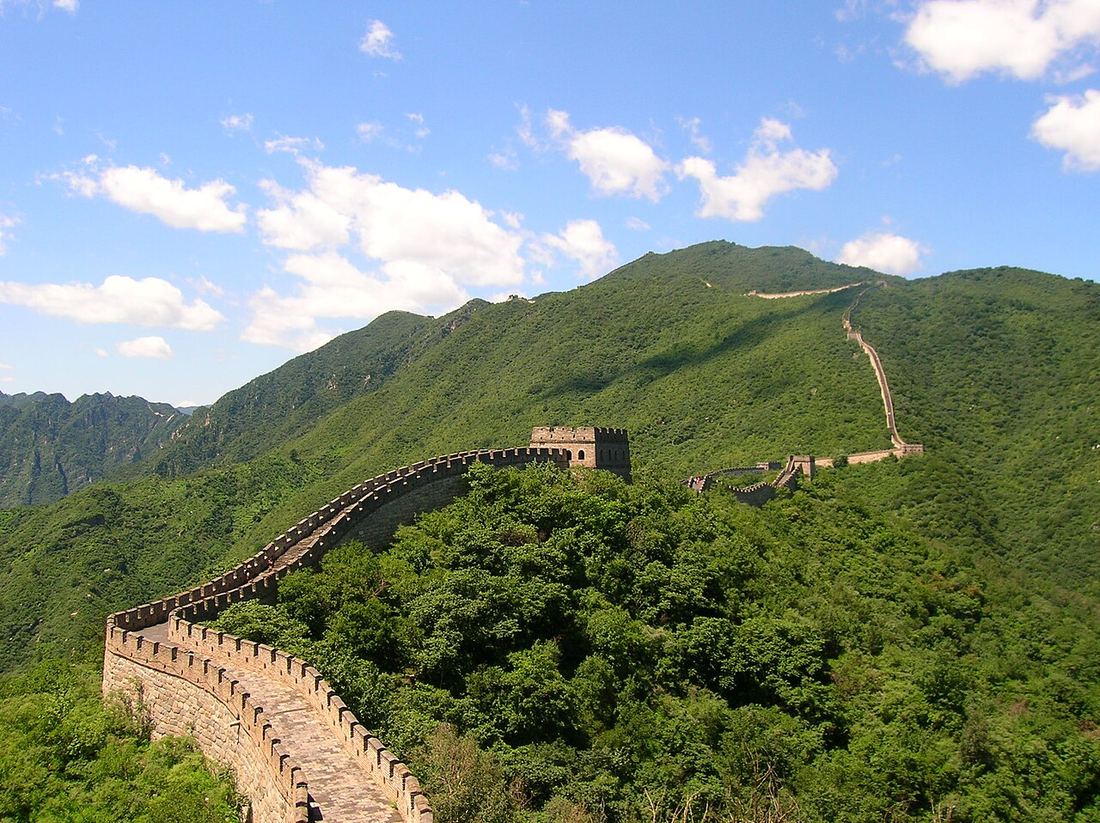
First, which section. Badaling is the most famous and the easiest to reach, but also the busiest, with long queues in peak season. Mutianyu has fewer visitors, is better preserved, and has a cable car and toboggan, with about 2.5 hours of driving each way. With older relatives or children, Mutianyu is usually the better choice.
Second, departure time. Leaving between 7:00 and 7:30 gets you there before 10:00, ahead of the guided groups, and allows you to come down before midday. Leaving after 8:00 often means arriving after 11:00, straight into the peak.
Third, the return. Climbing the wall is tiring, so going straight back to the hotel is usually right. If energy remains, the Ming Tombs or the Olympic Park can be added en route, but that should depend on how the day actually goes, so keep the flexibility.
Season and clothing in Beijing
The best periods are mid-April to May and September to October, when temperatures are comfortable and the air is clear — ideal for photography. Early April can still bring dust, and temperatures drop noticeably from late October.
Summer, June to August, is hot with daytime temperatures above 35 degrees, so outdoor sites such as the Forbidden City and the Great Wall are best tackled early. Winter, December to February, is cold and dry, potentially below minus ten, though snow over the Forbidden City and the Great Wall is spectacular and visitor numbers drop sharply.
Whatever the season, layering is advisable, since the gap between early morning and midday can exceed ten degrees. Beijing's dryness is also noticeable to visitors from the south, so bring lip balm and hand cream.
Payment, connectivity and practical preparation
In Beijing, the metro and buses accept mobile payment or a transit card, and taxis and ride-hailing run on mobile payment. Register payment apps and link a card before departure, since first-time registration may require identity verification and doing it at the airport is unpleasant.
On connectivity, if you need access to services such as Google or WhatsApp, confirm before departure that your plan covers them — roaming and some eSIMs do, while mainland local networks may restrict some. Have a backup arrangement as well.
It is also worth carrying a small amount of RMB cash. Most spending in Beijing works by mobile payment, but small vendors and some courtyard shops may still be cash-only. Better to have it than to need it.
Luggage and vehicle class: the overlooked cost
Beijing pickup vehicles run from sedans through SUVs to seven-seat MPVs and larger vans. Pricing differences come mainly from seat count and luggage space rather than distance, which is why a group of four is often considerably more expensive than a group of two — four people usually means at least four checked bags plus hand luggage, requiring a larger vehicle.
Our advice is to state your luggage count honestly to the consultant, including cabin bags. Concealing it hurts you rather than anyone else: if the boot will not close, somebody holds a case on their lap, or a second vehicle is arranged at short notice. In a city with long transfers like Beijing, that is especially awkward.
If you are also heading to the Great Wall or the outskirts, travel light. A Great Wall day does not require large cases, which can stay in hotel storage, allowing a smaller and cheaper vehicle.
Building Beijing into a wider itinerary
Beijing is one of the principal hubs of China's high-speed rail network. From Beijing, rail reaches Xi'an in about 4.5 hours, Tianjin in around 2 hours, Shanghai in about 5.5 and Jinan in around 4. That makes Beijing well suited to being combined with other cities.
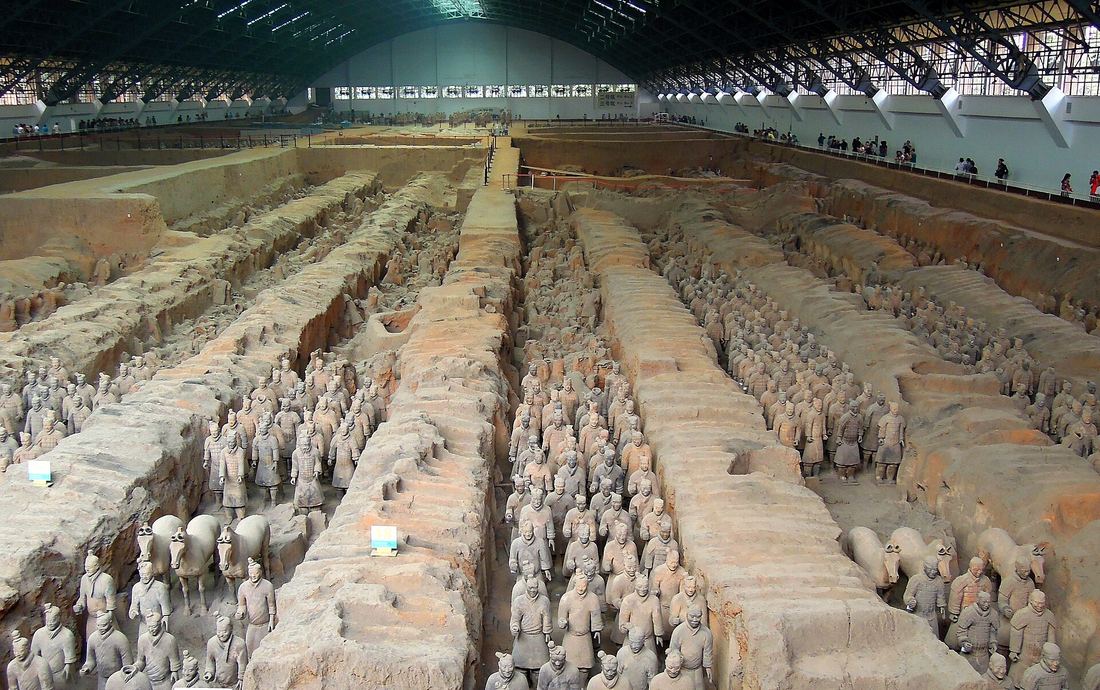
Two combinations are common. First, Beijing and Xi'an, covering the two central chapters of Chinese history — the Ming and Qing imperial city and the Qin and Han terracotta army — linked by high-speed rail. Second, Beijing and Shanghai, pairing the political and cultural capital with the modern metropolis, with Nanjing or Suzhou easily added between them.
China Custom Tours arranges Beijing airport pickup, city cars, dedicated Great Wall vehicles and intercity handovers, with a Cantonese-speaking guide for Hong Kong guests and Mandarin for Taiwan guests, no shopping stops and no strangers in your vehicle. Send us your dates, group size and the cities you have in mind and we will produce a day-by-day itinerary including all car arrangements.
In closing: get the first hour right
Beijing's scale means its itineraries need more precise planning than most. The same journey from airport to hotel can take forty minutes or two hours, and the difference lies in whether five things were aligned in advance: which airport, which terminal, how much luggage, where the hotel is, and at what time of day.
Confirm those five, and leave the rest to the person meeting you. It is the simplest thing we do when receiving guests in Beijing, and also the most effective.